

What If Every Patient Had an AI Advocate?

A Commercial Life Sciences View on Intelligent Engagement

“Voice will become the most natural interface for healthcare engagement — not because it is novel, but because it removes friction from complex systems. When intelligence meets everyday conversation, execution finally scales.” — Inderpreet Kambo, Cofounder & CEO, Improzo

Life sciences organizations have invested heavily in modern data foundations and engagement infrastructures. Snowflake-powered platforms now aggregate patient, provider, and real-world data at scale. CRM systems orchestrate field activity and omnichannel touchpoints. Advanced analytics surface patterns, segments, and adoption barriers with increasing sophistication.

Yet despite this progress, a familiar challenge persists, translating insight into consistent, real-time execution that meaningfully improves patient and provider journeys. In many organizations, CRM still functions primarily as a system of record, while analytics remains a retrospective layer. Insights are generated centrally and reviewed periodically but often sit outside the flow of daily work. This creates fragmented engagement, delayed responses, and inconsistent experiences across channels. As therapies become more complex and patient expectations continue to rise, insight alone is no longer enough. The real differentiator is how effectively organizations operate intelligence in real time.

The emerging concept of an AI advocate represents a shift from insight production to intelligent orchestration embedded directly into engagement workflows.

Moving from Insight to Intelligent, Voice-Enabled Engagement

Rather than producing periodic recommendations or static next-best-action reports, the AI advocate model leverages agentic AI to continuously monitor real-time data across Snowflake, CRM platforms, digital channels, and patient services. Intelligent agents interpret context, identify emerging barriers, and orchestrate actions automatically as journeys unfold.

Voice-enabled interfaces further remove friction from engagement. Patients, support teams, and field representatives can interact naturally with systems that understand context and trigger workflows instantly. This transforms engagement into a responsive ecosystem — one that adapts as patient needs change, rather than reacting after issues surface.

In practice, AI advocates enable commercial operators to:

  • Orchestrate real-time next-best actions across channels, triggering personalized outreach, education, and support workflows as patient and provider signals evolve.
  • Embed compliance and data quality directly into execution, using validation agents to ensure interactions meet regulatory standards while strengthening downstream analytics.
  • Unify fragmented touchpoints into a continuous journey view, connecting CRM activity, patient services, digital engagement, and real-world data in real time.
  • Scale personalization without operational complexity, delivering millions of individualized experiences consistently through automated, intelligent workflows.

Connecting Commercial Execution and Patient Journeys

Engagement in life sciences spans commercial teams, medical affairs, patient services, and digital platforms — often operating in parallel with limited coordination. This fragmentation leads to handoffs, delays, and inconsistent experiences for both patients and providers.

Agentic AI advocates act as an orchestration layer across this ecosystem. By maintaining a longitudinal, real-time view of each journey, intelligent agents align actions across functions and systems. Rather than relying on static reports or manual coordination, orchestration happens dynamically as events occur.

This enables organizations to focus on addressing real barriers — whether access challenges, therapy management complexity, or engagement gaps — while analytics continuously optimize strategies in real time.
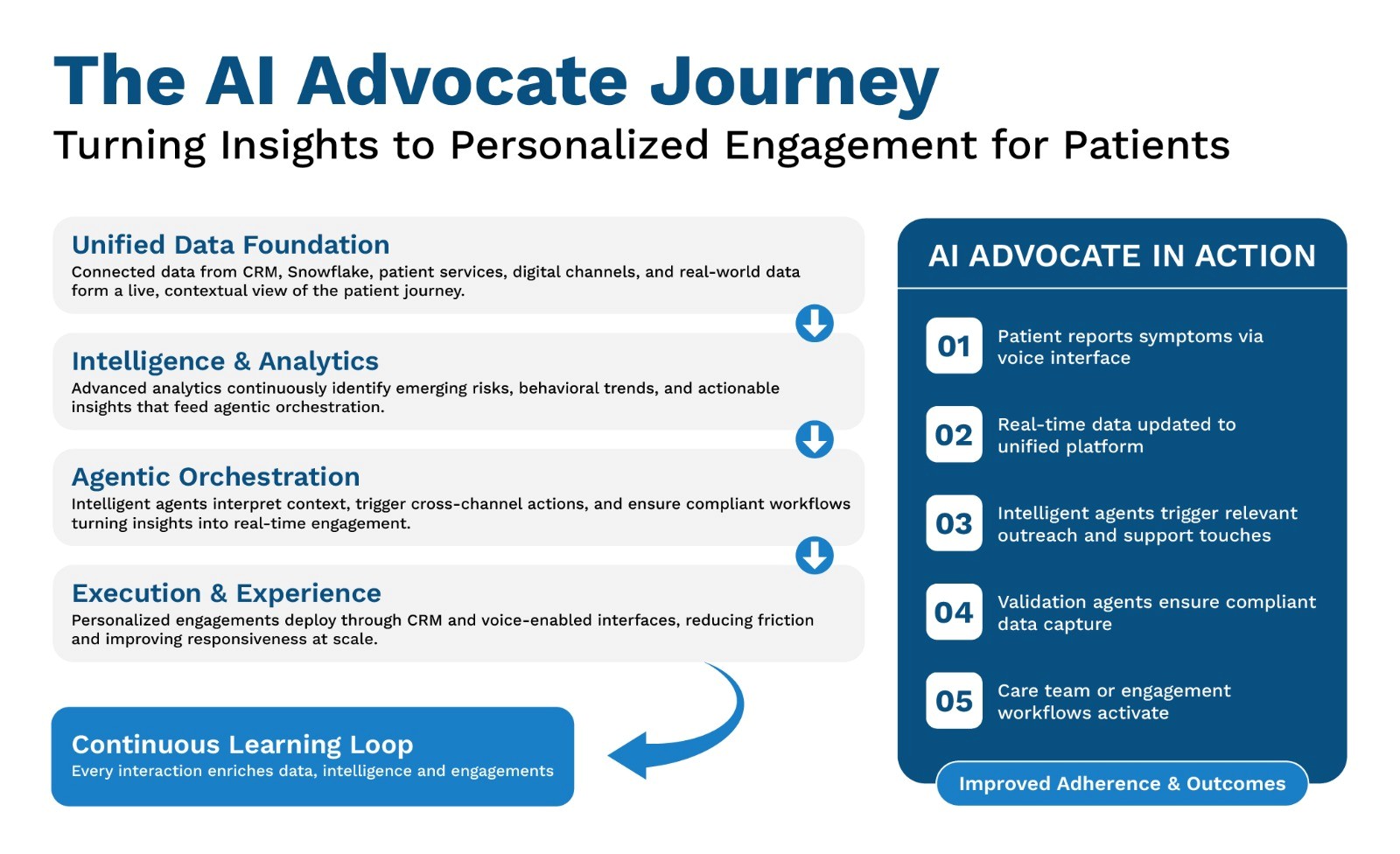
The framework visually illustrates how unified data feeds intelligence, how agentic orchestration connects insight to execution, and how CRM and voice-enabled engagement deliver real-time experiences — all reinforced through continuous learning. For operators, the outcome is faster response, clearer accountability, and measurably improved engagement effectiveness across the lifecycle.

The Improzo Perspective: From Insight to Real-Time Action

At Improzo, we believe the next phase of commercial transformation is not about adding more tools or generating more insights. It is about turning existing platforms — Snowflake, CRM, analytics,  into systems of real-time action.

  • Agentic AI becomes the connective layer between intelligence and execution. Engagement agents drive personalized actions across channels. Validation agents ensure trust, compliance, and data integrity. Orchestration agents coordinate workflows across commercial, medical, and patient services.
  • Voice-enabled engagement removes friction at the experience layer, making interaction more natural while capturing richer context in real time.

Together, these capabilities close the long-standing gap between analytics and execution. For patients, this creates seamless, proactive, and personalized journeys. For commercial leaders, it delivers measurable improvements in efficiency, engagement performance, and outcomes. The next era of life sciences engagement will not be defined by better insights alone, but by how effectively organizations operate in real time, for every journey.

Q&A: Redefining Market Intelligence in Life Sciences— From Static Reports to Predictive, Decision-Grade Platforms

A conversation with Jane Urban, Chief Data & Analytics Officer at Improzo, Oct 20, 2025

Q1: Jane, you’ve worked across multiple life sciences organizations leading analytics and transformation initiatives. How has market intelligence traditionally been approached in animal health?

Jane: For most of my career, market intelligence has been built around periodic reporting cycles. Teams pull data from third-party sources, blend it with internal sales data, and deliver monthly or quarterly spreadsheets and slide decks.

That model worked when channels were simpler and decisions moved more slowly. But today—with this dynamic increasingly visible in animal health—growth is happening across e-commerce, mass retail, specialty distributors, and evolving care models. Market dynamics can shift week to week, yet many leaders are still making decisions based on information that’s several weeks old. That gap between market reality and reporting is where opportunity is lost.

Q2: What are the biggest challenges companies face when relying on traditional retail and market research reports today?

Jane: There are four challenges I see consistently across life sciences organizations, including in animal health:

Flattened data structures
Performance across channels, geographies, species, and products is collapsed into high-level summaries, masking early signals and localized shifts.

Lagging insights
By the time reports are delivered—often four to six weeks after activity—the opportunity to course-correct pricing, promotion, or field focus has already passed.

Limited precision transparency
Forecasts are presented as single numbers or narrow ranges, without visibility into confidence, sensitivity, or underlying assumptions—making it difficult to act decisively.

Siloed data sources
Retail, distributor, internal sales, e-commerce, and market research data live in separate systems, preventing a truly unified view of demand and performance.

Q3: You often talk about the need for “living market intelligence platforms.” What does that mean in practice?

Jane: A living market intelligence platform continuously ingests data, refreshes metrics, and surfaces meaningful signals as the market changes—not weeks later.

In practice, that means:

    • Continuous ingestion from internal and external sources
    • Near real-time tracking across business and product hierarchies
    • Automated reconciliation and data validation
    • Predictive models layered on top of historical performance

Instead of producing static outputs, these platforms become part of how commercial, marketing, and field teams actually run the business day to day.

Q4: If you were to break modern market intelligence into a simple framework, what would it look like?

Jane: I think about modern market intelligence as four foundational layers:

Unified Data Foundation
All relevant sources integrated into a single analytics environment—retail, e-commerce, internal sales, and external market feeds.

Hierarchical Performance Modeling
Data structured the way the business actually operates—by channel, retailer type, geography, category, brand, SKU, and time—so teams can aggregate, drill down, and compare accurately. This directly reduces the extra weeks often spent answering, “Why did this number change?”

Precision & Validation Layer
Automated quality checks, anomaly detection, and statistical validation that surface issues early—before commercial leaders discover something “looks off” in a report.

Predictive & Insight Layer
Machine learning models that forecast trends, identify early share shifts, and explain key performance drivers—so teams can anticipate what’s coming, not just react to what already happened.

Together, these layers turn raw data into decision-grade market intelligence.

Q5: Predictive analytics is becoming a major focus across industries. How does AI specifically improve market intelligence outcomes?

Jane: AI allows organizations to model real-world complexity at scale. Instead of relying on straight-line trends, modern analytics can account for seasonality, promotions, channel shifts, competitive behavior, and regional variation, far beyond what manual analysis can support.

Most importantly, AI-driven forecasting replaces single-number projections with probability ranges. That shift—from certainty theater to quantified confidence—gives leaders a much stronger foundation for planning inventory, promotions, and field execution.

Q6: For organizations still operating with legacy reporting approaches, what does a realistic modernization roadmap look like?

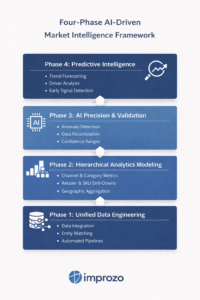
Jane: Most organizations follow a practical four-phase progression:

Phase 1 – Data integration
Bringing key internal and external sources into a unified analytics environment.

Phase 2 – Hierarchy structuring
Modeling data across real business dimensions to enable accurate aggregation and rapid drill-down.

Phase 3 – Automation and validation
Reducing manual effort while introducing continuous data quality monitoring.

Phase 4 – Predictive intelligence
Deploying forecasting models, trend detection, and driver analysis.

Importantly, many teams begin seeing meaningful value as early as Phase 2, with predictive capabilities layered in as trust and maturity grow.

Q7: Animal health is an interesting area. Looking ahead, how do you see the role of market intelligence evolving in areas such as animal health?

Jane: Market intelligence in animal health is evolving in ways that mirror broader life sciences through three fundamental shifts:

From retrospective reporting to real-time awareness
Teams will no longer wait for monthly or quarterly summaries. Performance will be continuously visible across channels, geographies, and product hierarchies as market dynamics unfold.

From descriptive metrics to predictive foresight
Analytics will move beyond explaining what happened to forecasting what’s likely to happen next, incorporating seasonality, channel migration, promotions, and competitive behavior with clear assumptions and confidence ranges.

From passive insights to decision enablement
Platforms will not only surface trends, but clearly explain the drivers behind them, supporting faster, more confident commercial decisions.

I’ve seen this shift firsthand in large-scale life sciences organizations. Moving from static reporting to integrated, predictive intelligence fundamentally changes how teams plan, prioritize, and execute. Organizations that make this transition consistently outperform those that don’t.

Final Perspective from Jane

“After working across multiple life sciences organizations, it’s clear that static reports can’t keep pace with today’s market complexity. The future belongs to AI-driven, precision market intelligence platforms that turn fragmented data into timely, predictive insight leaders can actually act on.”

At Improzo, I focus on helping life sciences organizations modernize how they integrate data, structure analytics, and apply AI across complex commercial ecosystems. The goal isn’t more reporting—it’s building scalable, predictive platforms that reduce lag, improve confidence, and enable better decisions at the speed the market now demands.

Unlocking Commercial Success: Mastering the Power of Patient-Level Data in Pharma

In today’s fiercely competitive pharmaceutical landscape, leveraging patient-level data (PLD) is no longer a competitive advantage—it’s a necessity. As the industry evolves, so too must our approach to harnessing the power of this granular data. This blog explores innovative applications of PLD that are transforming commercial strategies and driving improved patient outcomes.

Beyond Aggregates: The Granular Advantage

Traditional market analysis, reliant on aggregated data, provides a limited, top-down view. PLD offers a microscopic perspective, illuminating individual patient journeys and enabling us to understand treatment patterns, pinpoint unmet needs, and personalize engagement with unprecedented precision. This shift allows us to move beyond generic approaches toward a highly targeted, patient-centric model.

Key Applications of PLD for Enhanced Commercial Success:

  1. Comprehensive Patient Journey Mapping: Understanding the intricacies of the patient journey is paramount. By integrating diverse data sources – including electronic medical records (EMRs), claims data, lab results, and patient-reported outcomes – we can create detailed maps of patient experiences from diagnosis through treatment and beyond. This holistic view empowers us to identify critical touchpoints for intervention, optimize patient engagement, and improve adherence.
  2. Predictive Analytics for Enhanced Patient Targeting: Predictive analytics is revolutionizing patient identification and engagement. By analyzing historical patient data, treatment patterns, and even genetic markers, we can forecast which patients are most likely to benefit from specific therapies. This foresight enables highly targeted marketing efforts, timely interventions (e.g., outreach before a patient discontinues treatment), and the identification of high-value patient segments through AI-driven analytics.
  3. Personalized Medicine through Genomic Data Analysis: The rise of personalized medicine is transforming treatment paradigms. Integrating genomic data with traditional health records allows for the development of tailored therapies that cater to individual patient profiles. This approach not only maximizes treatment efficacy but also improves patient satisfaction and adherence. Advanced analytics can identify complex patterns in genetic data, guiding the development of highly targeted treatments.
  4. Real-Time Monitoring with Wearable Technology: Wearable technology offers a wealth of real-time patient data, opening new avenues for enhanced treatment outcomes. Continuous health metrics, such as heart rate, activity levels, and medication adherence, provide invaluable insights into patient behaviors and responses to treatment. This information facilitates timely adjustments in therapy and proactive engagement strategies to optimize adherence and overall health.
  5. Optimizing Clinical Trials with Data-Driven Insights: Data analytics is crucial for streamlining clinical trials. Historical data, predictive modeling, and real-world evidence (RWE) can optimize trial designs, improve site selection, and enhance participant recruitment. This data-driven approach to trial parameters and participant demographics reduces costs and accelerates the delivery of new therapies to market.
  6. Enhanced Post-Market Surveillance: Vigilance doesn’t end with drug approval. PLD analytics empowers continuous monitoring of real-world drug performance. Analyzing adverse event reports, social media sentiment, and other data sources allows for the early detection of potential safety issues and proactive responses. This not only safeguards public health but also protects brand reputation.
  7. AI-Driven Customer Segmentation: AI technologies enable sophisticated customer segmentation. By analyzing vast datasets encompassing demographics, treatment histories, prescribing behaviors, and more, we can identify high-value segments within target markets. This granular understanding allows for highly tailored marketing strategies that resonate with specific audiences, driving engagement and sales performance.
  8. Leveraging Social Media Insights: Social media platforms offer a rich source of real-time feedback. Natural language processing (NLP) techniques can analyze online conversations to gauge public perception of products, identify emerging trends or concerns within patient communities, and track competitor activities. These insights allow for timely adjustments in marketing strategies and product messaging.

Navigating the Challenges of PLD:

Realizing the full potential of PLD requires careful consideration of several critical challenges:

  • Data Privacy and Security: Protecting patient privacy is paramount. Companies must adhere to strict regulations like HIPAA, GDPR, and other global data privacy laws. This involves implementing robust data anonymization or de-identification techniques, secure data storage solutions, access controls, and audit trails. Transparency with patients about how their data is being used is also crucial for building trust.
  • Data Quality and Interoperability: PLD often resides in disparate systems (EMRs, claims databases, labs, etc.). Data quality issues, such as inconsistencies, inaccuracies, and missing data, can significantly impact the reliability of analyses. Investing in data cleaning, validation, and standardization processes is essential. Furthermore, ensuring interoperability between different data sources is crucial for creating a holistic view of the patient journey. This often requires adopting common data models and APIs.
  • Data Governance and Compliance: Establishing a clear data governance framework is critical. This includes defining roles and responsibilities, setting data access policies, and ensuring compliance with all relevant regulations. A dedicated data governance team can help manage data assets effectively and ensure ethical data usage.
  • Data Silos: Data silos within organizations can hinder the effective use of PLD. Breaking down these silos requires fostering a culture of data sharing and collaboration. Implementing centralized data platforms and promoting cross-functional data sharing can help organizations gain a more complete view of their data.
  • Analytical Expertise and Infrastructure: Extracting meaningful insights from PLD requires specialized analytical skills and robust IT infrastructure. Investing in data scientists, analysts, and the necessary hardware and software is essential. Cloud-based analytics platforms can offer scalability and flexibility for handling large datasets.
  • Ethical Considerations: The use of PLD raises ethical considerations, such as potential biases in data and the risk of discriminatory practices. Companies must ensure that their data analysis and decision-making processes are fair, equitable, and transparent. Developing ethical guidelines for data usage is crucial.

The Future of PLD:

The applications of PLD are constantly expanding. As data availability and analytical capabilities advance, we can expect even more innovative uses to emerge. Artificial intelligence and machine learning will play an increasingly critical role in extracting actionable insights and automating commercial processes. Blockchain technology may also play a role in enhancing data security and privacy.

Conclusion:

Patient-level data is a game-changer for the pharmaceutical industry. By embracing a data-driven approach, companies can gain a deeper understanding of their markets, personalize engagement, optimize resource allocation, and ultimately improve patient outcomes. Addressing the challenges outlined above is crucial for realizing the full potential of PLD and ensuring its responsible and ethical use. Those who master the power of PLD will not only achieve commercial success but also contribute to a healthier future.

Commercial Strategies in the Era of Precision Medicine

The pharmaceutical industry is experiencing a profound transformation as precision medicine emerges as a pivotal force reshaping drug development, marketing, and patient care. This shift towards personalized healthcare necessitates a re-evaluation of commercial strategies to effectively navigate the complexities of this evolving landscape. As organizations adapt to the demands of precision medicine, understanding its implications becomes essential for driving success in an increasingly competitive market.

The Shift to Precision Medicine

Precision medicine focuses on tailoring treatments to individual patient characteristics, including genetics, environment, and lifestyle. This approach marks a departure from traditional methods that rely on a one-size-fits-all model, enabling more effective and targeted therapies. According to industry insights, this transition has led to a notable increase in clinical research and product approvals aimed at specific patient populations, particularly in oncology and rare diseases.

Pharmaceutical companies must adapt their commercialization strategies to align with the unique demands of precision medicine. This includes developing targeted sales and marketing approaches that leverage data-driven insights to identify healthcare providers (HCPs) most likely to prescribe or refer patients for these specialized therapies. Achieving personalized engagement with HCPs is crucial for maximizing the impact of precision therapies.

Evolving Commercial Engagement Models

The rise of precision medicine is fundamentally transforming the pharmaceutical industry’s commercial engagement model. Companies must shift from traditional mass marketing strategies to targeted approaches, leveraging advanced analytics to identify healthcare providers (HCPs) most likely to adopt precision therapies based on their prescribing patterns and patient demographics. Embracing omnichannel strategies allows HCPs to access information seamlessly across digital platforms and in-person interactions.

Additionally, increasing patient involvement in treatment decisions necessitates direct engagement strategies that educate and empower patients about precision therapies. Collaboration with stakeholders, including diagnostic developers and payers, is essential for navigating this complex landscape and improving patient outcomes through innovative, personalized treatments.

Changes in Organizational Structure

To support these new engagement models, pharmaceutical companies will need to reconfigure their organizational structures. This includes establishing dedicated analytics teams focused on data collection and integration from diverse sources such as electronic health records (EHRs) and genomic databases. These teams will work closely with research and development (R&D), marketing, and sales departments to inform strategy and optimize decision-making processes.

Additionally, cross-functional collaboration will become essential. The traditional silos between departments must be dismantled to foster a culture of teamwork that aligns R&D efforts with market needs. Commercialization teams should collaborate closely with clinical development teams to ensure that market access strategies reflect the unique characteristics of precision therapies.

Data-Driven Market Access Strategies

In the realm of precision medicine, market access strategies must be redefined. Traditional pricing models are no longer sufficient; companies must adopt data-driven approaches that reflect the value of personalized therapies. With increasing competition and tighter financial landscapes, it is essential for organizations to develop customized market access strategies that consider not only the clinical efficacy of their products but also their economic impact.

Utilizing real-world evidence (RWE) is critical in this context. By analyzing data from diverse sources such as electronic health records (EHRs), patient registries, and claims data, companies can provide compelling evidence of their therapies’ effectiveness in real-world settings. This information can facilitate negotiations with payers and improve reimbursement rates, ultimately enhancing patient access to innovative treatments.

Embracing Companion Diagnostics

The commercialization of precision medicine often involves companion diagnostics—tests used to determine a patient’s suitability for a specific therapy. Integrating companion diagnostics into commercial strategies not only enhances treatment outcomes but also provides additional revenue streams for pharmaceutical companies.

As precision therapies become more prevalent, establishing robust partnerships with diagnostic developers is crucial to streamline the process of bringing these tests to market alongside therapeutic counterparts. This collaboration can facilitate faster patient identification and treatment initiation, ultimately improving overall patient care.

Navigating Challenges in Precision Medicine

While the potential benefits of precision medicine are significant, several challenges must be addressed. Issues such as data privacy concerns, regulatory hurdles, and the need for high-quality data access remain critical barriers. Engaging with regulators and policymakers is essential to shape standards that support innovation while ensuring patient safety.

Moreover, building internal capabilities around data generation, integration, and analysis is vital for success in this new landscape. Organizations may need to partner with specialized firms or invest in training programs to equip their teams with the necessary skills to leverage data effectively.

Conclusion: Embracing Change in Precision Medicine

As the industry moves deeper into the era of precision medicine, pharmaceutical companies must rethink their commercial strategies to capitalize on this transformative opportunity. By embracing data-driven decision-making, optimizing sales and marketing efforts, integrating companion diagnostics into their strategies, adapting organizational structures for enhanced collaboration, and recognizing the critical role of patient influence in treatment decisions, organizations can position themselves for success in an increasingly competitive environment.

The landscape is rapidly changing; those who adapt will not only thrive but also contribute significantly to improving patient outcomes through innovative therapies tailored to individual needs. Embracing precision medicine is not just a strategic imperative; it represents an opportunity to redefine how healthcare is delivered in the 21st century.

Leveraging ‘Predictive  Analytics to support Oncology Patient Journeys’

The oncology landscape is rapidly changing, with a significant surge in the number of approved therapies. In the past five years alone, 60+ new oncology drugs have been launched, intensifying competition among biopharmaceutical companies to effectively identify and engage specific patient segments that could benefit from these treatments. However, the challenge remains: how can companies accurately pinpoint the right patients at the right time amidst narrow drug labels and small patient populations? To navigate this complexity, it is essential to establish a robust analytics capability that predicts key events in the oncology patient journey. This capability not only assists your sales and marketing teams in targeting oncologists likely to treat eligible patients but also empowers patient support programs to anticipate potential drop-offs and proactively assist those patients. Additionally, it enables medical teams to identify optimal clinical trial sites that align with patient eligibility criteria.

Developing a predictive capability for oncology patient journeys can be structured into four essential steps:

  1. Mapping the Oncology Patient Journey
    The first step involves carefully mapping out the oncology patient journey while prioritizing critical events that impact brand success. For instance, predictive modeling should focus on identifying patients who are transitioning between therapy lines, especially for drugs indicated for first or subsequent lines of treatment. Utilizing established guidelines like those from the National Comprehensive Cancer Network (NCCN) can provide a solid foundation for this mapping process. Engaging internal experts and conducting research within oncology practices will further refine your understanding of patient pathways.
  2. Integrating Real-World Patient Data
    The next step is to acquire and integrate various real-world data sources, such as claims data, electronic medical records (EMR), lab test results, and specialty pharmacy information. A systematic data strategy is crucial for curating and connecting these sources to effectively support predictive modeling capabilities. Your team should evaluate factors such as data richness, granularity, capture rates, refresh rates, acquisition costs, and connectivity with other data sources. Since a single comprehensive patient-level data source may not be available, it may be necessary to make trade-offs across these dimensions while initially developing predictive capabilities using one or two primary data sources.
  3. Developing Predictive Algorithms
    The third step involves creating and testing algorithms designed to predict key events along the oncology journey. Your team can utilize retrospective modeling on real-world data to develop various algorithms while paying close attention to changes in therapy lines across different cancer types. Considerations such as evolving treatment pathways, variability in oncologist practices, and gaps in real-world data must be considered during this process. Collaborating with sales, marketing, and medical teams will enhance algorithm accuracy and foster buy-in for adopting these predictive models. Increasingly, machine learning algorithms are being employed alongside robust feedback mechanisms to create adaptive predictive models that improve over time.
  4. Establishing a Scalable Analytics Platform
    The final step is implementing a scalable analytics platform that facilitates both the development of predictive models and the dissemination of insights to relevant stakeholders. Key features of an effective analytics platform include a comprehensive patient data management module for integrating real-world data sources, an intelligent business rules engine for creating longitudinal patient cohorts with diverse eligibility criteria, an analytics workbench for model development using machine learning techniques, and a business insights consumption module for sharing predictive insights across sales, marketing, patient support, and medical teams.

By strategically combining these four components—mapping the patient journey, integrating real-world data, developing predictive algorithms, and establishing a scalable analytics platform—your biopharma team can significantly enhance its capabilities in predicting oncology patient journeys. Organizations that successfully implement these strategies are likely to receive positive feedback from their field sales teams regarding the timely availability of predictive insights. This capability not only allows sales teams to connect with busy oncologists at critical moments but also ensures that effective therapies reach the right cancer patients when they need them most. In an era where precision medicine is paramount, developing an oncology patient journey prediction capability presents a transformative opportunity for your emerging biopharma team to optimize market strategies and improve patient outcomes.

Enhancing Your Commercial Model Design via Medical Science Liaisons

In the pharmaceutical industry, the role of Medical Science Liaisons (MSLs) has evolved significantly since its inception about 50 years ago. Initially focused on promotional activities, MSLs now serve as vital connectors between pharmaceutical companies and the medical community. For commercial technology and analytics leaders, understanding how to effectively integrate MSLs into your commercial model design can enhance engagement with healthcare professionals (HCPs) and ultimately drive better patient outcomes.

Key Challenges Faced by Medical Science Liaisons

Despite their importance, MSLs encounter several challenges that can hinder their effectiveness. One significant challenge is engaging KOLs, who have diverse needs that change over time. MSLs must stay attuned to these evolving preferences but tracking them can be cumbersome without the right tools. Additionally, accessing top KOLs presents a formidable obstacle; busy schedules and gatekeepers often limit MSL availability to these influential figures. This inaccessibility can create barriers to meaningful engagement. Lastly, MSLs face the daunting task of simplifying information consumption amidst an overwhelming amount of data—from clinical trial updates to industry trends. Without streamlined processes for assimilating this information, MSLs may struggle to focus on actionable insights rather than getting lost in data.

Leveraging MSLs for Commercial Model Design

Integrating MSLs into your commercial model design offers several strategic advantages:

  • Enhanced Relationship Management: By equipping MSLs with advanced analytics tools, pharmaceutical companies can empower them to build deeper relationships with KOLs. These tools can help track interactions, preferences, and emerging trends, enabling more personalized engagement strategies.
  • Data-Driven Insights: MSLs are uniquely positioned to gather real-world insights from KOL interactions. By incorporating these insights into your commercial strategy, you can better align your messaging and product offerings with the needs of healthcare providers. This alignment not only enhances engagement but also fosters trust and credibility in your brand.
  • Streamlined Communication Channels: Establishing clear communication channels between MSLs and commercial teams ensures that insights gathered by MSLs are effectively shared across the organization. This collaboration can lead to more informed decision-making regarding marketing strategies, sales approaches, and product development.

Implementing Effective Solutions

To address the challenges faced by MSLs and enhance your commercial model design, pharmaceutical firms consider many viable solutions and strategies such as:

  1. Investing in Technology: Implementing a robust Customer Relationship Management (CRM) system tailored for medical affairs can streamline data collection and analysis for MSLs. This technology should facilitate tracking KOL interactions, preferences, and emerging trends in real time.
  2. Providing effective Training and Support: Continuous training for MSLs on the latest scientific advancements and industry trends is essential. Additionally, equipping them with resources that simplify information consumption will allow them to focus on high-impact activities rather than administrative tasks.
  3. Fostering Cross-Functional Collaboration: Encourage collaboration between MSL teams and other departments such as marketing, sales, and R&D. Regular meetings to share insights from KOL engagements can lead to a more cohesive strategy that aligns with market needs.

The integration of Medical Science Liaisons into your commercial model design is not just an operational enhancement; it is a strategic imperative in today’s competitive pharmaceutical landscape. By recognizing the critical role that MSLs play in bridging the gap between science and commercial success, pharmaceutical companies can leverage their expertise to foster deeper relationships with healthcare professionals, drive informed decision-making, and ultimately improve patient outcomes.

As commercial technology and analytics leaders navigate this evolving landscape, investing in the capabilities of MSLs will be key to achieving long-term success in the pharmaceutical industry. Embracing this approach will not only enhance engagement but also position your organization as a trusted partner in advancing healthcare solutions.

Adopting AI to Reduce the Burden of Cardiovascular Disease (CVD)

Cardiovascular disease (CVD) is the leading cause of death globally, accounting for an estimated 19.1 million deaths in 2022. However, artificial intelligence (AI) is emerging as a powerful tool for reducing CVD burden.

AI can be used to improve CVD prevention, diagnosis, treatment, and management in several ways. For example:

  • Prevention: Personalized risk prediction models for CVD. These models can be used to identify individuals at high risk of CVD and target them with preventive interventions, such as lifestyle changes or medication.
  • Diagnosis: Develop more accurate and efficient diagnostic tools for CVD. For example, AI-powered algorithms can be used to analyze medical images to identify abnormalities that may be missed by the human eye.
  • Treatment: Personalized treatment plans for CVD patients. These plans can be tailored to the individual patient’s disease profile and lifestyle factors. AI can also be used to develop new and more effective therapies for CVD.
  • Management: Tools to help patients manage their CVD. For example, AI-powered apps can be used to help patients track their symptoms, medication adherence, and lifestyle changes.

AI-enabled MedTech solutions are already being used to reduce CVD burden globally. For example, the following are just a few examples:

  • AI-powered cardiovascular imaging software: This software can be used to analyze medical images such as MRI, CT, and PET scans to identify abnormalities that may be missed by the human eye. This can lead to earlier diagnosis and treatment of CVD.
  • AI-powered risk assessment tools: These tools can be used to assess an individual’s risk of developing CVD based on their medical history, lifestyle factors, and genetic makeup. This information can be used to develop personalized preventive interventions.
  • AI-powered wearable devices: These devices can be used to track vital signs such as heart rate, blood pressure, and activity levels. This data can be used to monitor CVD patients and identify early signs of complications.
  • AI-powered mobile health (mHealth) solutions: These solutions can be used to deliver personalized CVD prevention and management interventions to people in remote and underserved areas. For example, AI-powered mHealth apps can be used to help people track their blood pressure, cholesterol levels, and physical activity levels. They can also be used to provide education and support on CVD risk factors and lifestyle changes.
  • AI-powered cloud-based solutions: These solutions can be used to provide access to advanced CVD diagnostic and treatment technologies to people in LMICs. For example, AI-powered cloud-based services can be used to analyze medical images remotely or to provide telemedicine consultations.

AI-enabled MedTech solutions have the potential to revolutionize the way we prevent, diagnose, treat, and manage CVD. By making these technologies more accessible and affordable to people around the world, we can reduce CVD burden globally and improve the quality of life for millions of people. By leveraging AI-enabled MedTech solutions, we can create a world where CVD is no longer a leading cause of death and disability, regardless of where people live.