Smarter Market Access and Launch Execution in the Age of Agentic AI

This perspective reflects observations from working with market access, medical, and commercial teams across multiple launches. It is intended as practical reflection, not product advocacy.

Executive Summary

Pharmaceutical companies have invested heavily in market access strategy, analytics, and evidence generation. Yet, launch outcomes remain uneven. In many cases, the issue is not strategy quality but execution—specifically, the challenge of translating centralized intent into consistent, compliant action across teams and markets. Agentic AI, when applied thoughtfully, offers a practical way to support execution at scale. Rather than introducing new tools or workflows, agentic approaches embed decision support directly into how work gets done, helping organizations respond to change with greater consistency and less friction, particularly during early launch when payer decisions and field responses are most volatile.

Why Strong Access Strategies Still Struggle in Execution

Most launch teams recognize the pattern. A well-designed access strategy is finalized pre-approval. Training is delivered. Materials are approved. Then reality intervenes. Payer decisions arrive in waves. Policies vary by plan and geography. Field teams receive questions they were not trained for, or face scenarios that were not anticipated.

The issue is rarely effort or intent. It is timing and translation. Guidance often reaches the field after decisions are already being made. Updates require new decks, retraining, or system changes. In fast-moving launch environments, this lag has real consequences.

CRM and analytics platforms excel at documenting what happened. They are less effective at supporting what should happen next.

Agentic AI as a Practical Execution Layer

Strategy only matters if it shows up in day-to-day decisions. Agentic AI helps ensure intent is executed consistently when teams are under real operational pressure.

In this context, agentic AI refers to systems that interpret context and act within approved boundaries, rather than simply generating insights or answers. Agentic AI shifts the focus from reporting to execution support. Instead of relying on static playbooks, agentic systems interpret context—who the user is, what has changed, and what is approved—and surface relevant guidance within existing workflows.

This does not remove human judgment. It narrows the gap between intent and action. When a payer policy changes mid-launch, the challenge is not discovering the update. It is ensuring that teams interpret and respond to it consistently. Agentic systems help translate change into role-specific, compliant recommendations without forcing teams to stop and reorient.

Used well, agents reduce variability. Used poorly, they add noise. Design discipline matters.

Where Agentic Approaches Create Real, Observable Value

In practice, agentic execution support tends to matter most in a small number of execution-heavy areas:

  • Field-facing translation of access strategy
    Teams receive guidance in context—aligned to geography, role, and timing—rather than relying on memory, manuals, or post hoc clarification.
  • Early-launch adaptation
    As coverage decisions and utilization management criteria emerge, execution adjusts without waiting for formal retraining cycles.
  • Consistency under pressure
    When teams are stretched, embedded guidance reduces reliance on individual interpretation and informal workarounds.
  • Structured feedback to strategy teams
    Signals from execution are captured in usable form, enabling faster refinement of access strategy.

Individually, these gains are incremental. Together, they reduce avoidable friction during the most sensitive phase of a launch. The value shows up less in breakthroughs and more in everyday execution.

Designing for Regulated Reality

Agentic systems in life sciences must be constrained, auditable, and aligned to approved content. The goal is not speed alone, but reliability. Platforms that treat agents as an execution layer—rather than a replacement for existing systems—tend to integrate more cleanly and age better over time.

Voice and Data-Native Interaction Without Workflow Disruption

Execution support only works if it fits naturally into daily work. Voice-enabled interaction is increasingly relevant—not as a novelty, but as a practical interface. It allows teams to capture insights or ask context-aware questions without breaking flow, particularly in field-based roles.

Equally important is where agentic reasoning occurs. Operating directly on governed enterprise data platforms, such as Snowflake, ensures guidance reflects current, permissioned data without duplication or reconciliation. In regulated environments, trust in the underlying data is non-negotiable.

The combination is subtle but important: natural interaction on top, disciplined data foundations underneath.

A More Resilient Model for Launch Execution

Market access will always involve uncertainty. What organizations can control is how they respond as conditions change. Agentic AI, applied with restraint, offers a way to close the gap between strategy and execution without adding operational burden. The result is not perfect foresight, but fewer preventable missteps when it matters most. A model with the flexibility to incorporate new technology in service of decision-making can materially reduce friction and leakage in market access.

From Improzo

From Improzo’s perspective, agentic execution represents a natural evolution of how life sciences teams operationalize strategy—embedded within existing systems, grounded in enterprise data, and designed to support compliant action at scale. The emphasis is not on replacing teams or platforms, but on reducing friction between intent and execution across commercial and medical operations.

What If Every Patient Had an AI Advocate?

A Commercial Life Sciences View on Intelligent Engagement

“Voice will become the most natural interface for healthcare engagement — not because it is novel, but because it removes friction from complex systems. When intelligence meets everyday conversation, execution finally scales.” — Inderpreet Kambo, Cofounder & CEO, Improzo

Life sciences organizations have invested heavily in modern data foundations and engagement infrastructures. Snowflake-powered platforms now aggregate patient, provider, and real-world data at scale. CRM systems orchestrate field activity and omnichannel touchpoints. Advanced analytics surface patterns, segments, and adoption barriers with increasing sophistication.

Yet despite this progress, a familiar challenge persists, translating insight into consistent, real-time execution that meaningfully improves patient and provider journeys. In many organizations, CRM still functions primarily as a system of record, while analytics remains a retrospective layer. Insights are generated centrally and reviewed periodically but often sit outside the flow of daily work. This creates fragmented engagement, delayed responses, and inconsistent experiences across channels. As therapies become more complex and patient expectations continue to rise, insight alone is no longer enough. The real differentiator is how effectively organizations operate intelligence in real time.

The emerging concept of an AI advocate represents a shift from insight production to intelligent orchestration embedded directly into engagement workflows.

Moving from Insight to Intelligent, Voice-Enabled Engagement

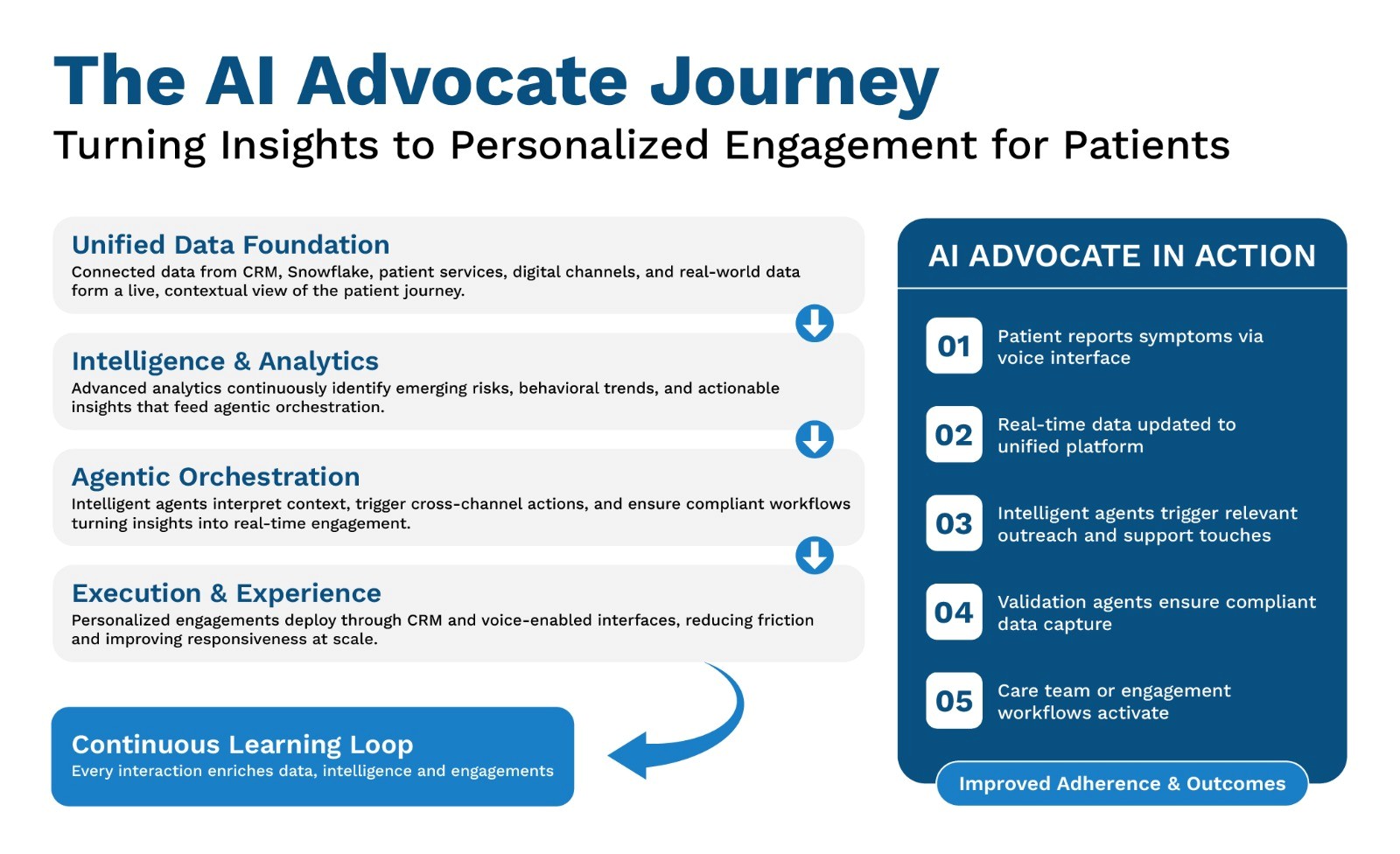
Rather than producing periodic recommendations or static next-best-action reports, the AI advocate model leverages agentic AI to continuously monitor real-time data across Snowflake, CRM platforms, digital channels, and patient services. Intelligent agents interpret context, identify emerging barriers, and orchestrate actions automatically as journeys unfold.

Voice-enabled interfaces further remove friction from engagement. Patients, support teams, and field representatives can interact naturally with systems that understand context and trigger workflows instantly. This transforms engagement into a responsive ecosystem — one that adapts as patient needs change, rather than reacting after issues surface.

In practice, AI advocates enable commercial operators to:

  • Orchestrate real-time next-best actions across channels, triggering personalized outreach, education, and support workflows as patient and provider signals evolve.
  • Embed compliance and data quality directly into execution, using validation agents to ensure interactions meet regulatory standards while strengthening downstream analytics.
  • Unify fragmented touchpoints into a continuous journey view, connecting CRM activity, patient services, digital engagement, and real-world data in real time.
  • Scale personalization without operational complexity, delivering millions of individualized experiences consistently through automated, intelligent workflows.

Connecting Commercial Execution and Patient Journeys

Engagement in life sciences spans commercial teams, medical affairs, patient services, and digital platforms — often operating in parallel with limited coordination. This fragmentation leads to handoffs, delays, and inconsistent experiences for both patients and providers.

Agentic AI advocates act as an orchestration layer across this ecosystem. By maintaining a longitudinal, real-time view of each journey, intelligent agents align actions across functions and systems. Rather than relying on static reports or manual coordination, orchestration happens dynamically as events occur.

This enables organizations to focus on addressing real barriers — whether access challenges, therapy management complexity, or engagement gaps — while analytics continuously optimize strategies in real time.

The framework visually illustrates how unified data feeds intelligence, how agentic orchestration connects insight to execution, and how CRM and voice-enabled engagement deliver real-time experiences — all reinforced through continuous learning. For operators, the outcome is faster response, clearer accountability, and measurably improved engagement effectiveness across the lifecycle.

The Improzo Perspective: From Insight to Real-Time Action

At Improzo, we believe the next phase of commercial transformation is not about adding more tools or generating more insights. It is about turning existing platforms — Snowflake, CRM, analytics,  into systems of real-time action.

  • Agentic AI becomes the connective layer between intelligence and execution. Engagement agents drive personalized actions across channels. Validation agents ensure trust, compliance, and data integrity. Orchestration agents coordinate workflows across commercial, medical, and patient services.
  • Voice-enabled engagement removes friction at the experience layer, making interaction more natural while capturing richer context in real time.

Together, these capabilities close the long-standing gap between analytics and execution. For patients, this creates seamless, proactive, and personalized journeys. For commercial leaders, it delivers measurable improvements in efficiency, engagement performance, and outcomes. The next era of life sciences engagement will not be defined by better insights alone, but by how effectively organizations operate in real time, for every journey.

NBA in Pharma: The Playbook for Pharma Companies to transform their operations

Introduction

Pharma companies are facing a data-driven revolution, with digital innovation and analytics rapidly transforming how they operate and engage with stakeholders. According to a McKinsey report, by 2025, organizations that effectively combine, analyze, and interpret disparate datasets will be best positioned to elevate performance and optimize outcomes for both patients and physicians1. Another McKinsey survey highlights that the winners in this evolving landscape will be those who harness advanced analytics and real-world evidence to inform every interaction and decision.

Challenges in Pharma Operations

Pharma companies are grappling with a rapidly evolving landscape that demands smarter, more agile operations. Here are the key challenges-and what could be done to address them:

  • Fragmented Data Ecosystems:
    Most organizations still operate with data scattered across CRM systems, EHRs, marketing platforms, and external sources. This fragmentation makes it difficult to generate a unified, actionable view of HCPs. By investing in robust data integration and cloud-based platforms, pharma could lay the groundwork for more intelligent engagement.
  • Lack of Personalization and Relevance:
    HCPs are inundated with generic, repetitive communications that fail to address their specific needs or preferences. Companies could deploy advanced analytics and AI-driven content engines to tailor messaging, ensuring each interaction is timely, relevant, and valuable.
  • Inefficient Resource Allocation:
    Sales and medical field teams often spend significant time on administrative tasks or low-value activities, reducing their impact. By adopting AI-powered prioritization and route optimization techniques proven in logistics and retail-pharma could ensure that resources are focused where they matter most.
  • Compliance and Regulatory Complexity:
    With strict regulations governing every interaction, the risk of non-compliance is ever-present. Real-time compliance monitoring and anomaly detection, inspired by financial services and cybersecurity, could help pharma proactively identify and mitigate risks.
  • Siloed Operations and Slow Decision-Making:
    Disconnected teams and manual processes slow down response times and hinder agility. By embracing cross-functional collaboration tools and intelligent automation, companies could accelerate decision-making and adapt faster to market changes.

According to a recent industry study, by 2027, 83% of HCP engagements are expected to be orchestrated by AI-driven NBA platforms. This underscores the urgency for pharma to address these challenges and modernize their operations.

What is Next Best Action?

With HCPs flooded with multiple messages & change in the pharma landscape, a data driven & ML/AI led Next Best Action (NBA) approach is the way ahead. NBA enables the sales & marketing teams to reach HCPs through the right channel, with the right frequency & with correct content. This would increase the promotional impact of the teams, thus enhancing the efficacy of their efforts.

How does Next Best Action work?

NBAs leverage distinct & large amounts of data to recommend individual HCP-centric content & channels based on past interactions. Using advanced analytics, NBA engine identifies patterns & insights to recommend the best channel to reach out to the HCP. Along with the channel recommendation, the engine would also recommend optimal time to send corporate emails & notify field teams using automated platforms. Along with these recommendations, the NBA would also offer rationale for suggested channels, thus instilling confidence into sales & marketing operations.

How can NBA solution help?

  1. Personalized Marketing Content – Moving away from a generalized targeting strategy, NBA leverages advanced analytics & data to identify best action for each HCP target. This personalization aspect would lead to HCPs being more receptive to the marketing activity
  2. Improved coordination – Sales & marketing teams need to work in harmony, rather than working in silos. With the NBA engine, sales teams would be informed of a corporate email or a centralized marketing effort, thus doing away with disorganization & impersonal communication methodology
  3. NBA based HCP Segmentation – HCP segmentation based on NBA recommendations would enable tailored messaging & personalization in communication to HCPs.
  4. Improved RoI – With decreased costs due to optimal marketing & de-duplication of efforts & resulting prescription lift, NBA could go a long way in increasing the RoI of promotional efforts.

The NBA Framework: Crawl, Walk, Run

Pharma companies are increasingly adopting a “Crawl, Walk, run” approach to NBA implementation, ensuring scalable, sustainable transformation while learning from other industries’ best practices.

Crawl: Laying the AI Foundation

  • Pilot Programs:
    Organizations begin with focused NBA pilots in select brands or channels. These pilots use foundational AI models and rule-based recommendations, providing early insights into engagement improvements and operational bottlenecks.
  • Building Unified Data Repositories:
    The initial phase includes integrating prescription, engagement, and third-party data into a single source of truth, reducing manual data prep and enabling more advanced analytics.

Walk: Scaling Intelligent Orchestration

  • Multichannel Integration:
    As capabilities mature, companies expand NBA to multiple brands and channels, integrating digital, in-person, and virtual touchpoints. AI-driven orchestration, inspired by retail and customer service, routes HCPs to the most effective engagement channels.
  • Predictive Analytics:
    Predictive models, like those used in manufacturing and supply chain optimization, anticipate HCP needs and knowledge gaps, triggering timely, personalized outreach.

Run: Enterprise-Wide Autonomy

  • Agentic AI Systems:
    At this stage, companies deploy autonomous AI agents capable of scheduling, personalizing, and optimizing interactions in real time. These systems continuously learn from engagement data and adjust strategies without manual intervention, mirroring advancements in autonomous marketing and customer service.
  • Self-Optimizing Campaigns:
    Drawing from digital advertising best practices, AI reallocates resources across channels based on real-time performance, ensuring optimal ROI and compliance.

The Future Playbook

Pharma companies are not just adopting NBA-they are evolving their operating models by integrating agentic AI and learning from sectors like retail, logistics, and cybersecurity. Hybrid human-AI teams, real-time compliance audits, and quantum-ready analytics are all on the horizon. According to McKinsey, organizations that lead in advanced analytics and digital transformation will set the standard for value and patient outcomes by 2025.1

By following a structured, phased approach and embracing cross-industry innovation, pharma organizations can unlock the full potential of NBA-delivering smarter engagement, improved compliance, and a competitive edge in the digital era.

Measuring Marketing ROI: A Data-Driven Approach for Pharma Commercial Leaders

In the pharmaceutical industry, marketing effectiveness isn’t a matter of gut feeling; it’s a science. With significant investments at stake, commercial leaders demand clear, data-driven answers about marketing ROI. This blog outlines a robust, analytically rigorous framework for evaluating the effectiveness of your pharmaceutical marketing strategy, moving beyond vanity metrics to focus on tangible business outcomes.

Beyond Impressions: Focusing on What Matters

Too often, marketing effectiveness is measured by easily accessible but ultimately superficial metrics like impressions or website visits. While these have a place, they don’t tell the whole story. True marketing effectiveness must be tied to business objectives: increased prescriptions, improved market share, accelerated product adoption, and ultimately, revenue growth. We need to move beyond activity metrics and focus on impact.

A Multi-Dimensional Framework for Evaluation:

A comprehensive evaluation framework must consider multiple dimensions:

  1. Market-Level Impact: This examines the overall impact of your marketing efforts on the market for your product. Key metrics include:
    • Market Share Growth: Are you gaining share within your target market? This requires robust market data and careful analysis to isolate the impact of your marketing from other factors (e.g., competitor activity, new clinical data).
    • Prescription Volume/Sales Growth: Is your marketing driving increased prescriptions or sales? This requires tracking prescription data or sales figures and correlating them with your marketing campaigns.
    • Brand Awareness & Perception: How is your marketing influencing brand awareness and perception among target audiences (physicians, patients, payers)? This can be measured through surveys, social media analysis, and other market research techniques.
    • Return on Marketing Investment (ROMI): This calculates the return generated for every dollar spent on marketing. It’s a crucial metric for demonstrating the financial value of your marketing efforts. Calculating ROMI accurately requires careful attribution modeling, which we’ll discuss later.
  2. Physician-Level Impact: This assesses how your marketing is influencing physician behavior. Key metrics include:
    • Prescribing Behavior: Are target physicians prescribing your product more frequently? Analyzing prescription data by physician segment is essential.
    • Adoption of New Therapies: How quickly are physicians adopting your new therapies? Tracking adoption rates and identifying factors that influence adoption is critical.
    • Physician Engagement: How are physicians engaging with your marketing materials (e.g., website visits, webinar attendance, sales rep interactions)? This data can provide insights into the effectiveness of different marketing channels.
  3. Patient-Level Impact: This examines how your marketing is influencing patient behavior and outcomes. Key metrics include:
    • Treatment Adherence: Is your marketing improving patient adherence to prescribed therapies? This can be measured through refill rates and other adherence tracking methods.
    • Patient Education & Empowerment: Is your marketing effectively educating and empowering patients to manage their condition? This can be assessed through patient surveys and feedback.
    • Patient Satisfaction: How satisfied are patients with their treatment experience? While not solely attributable to marketing, patient satisfaction can be influenced by effective patient support programs and educational materials.
  4. Channel-Level Effectiveness: This evaluates the performance of individual marketing channels (e.g., digital marketing, sales rep detailing, medical congresses). Key metrics include:
    • Reach & Engagement: How many target physicians or patients are you reaching with each channel, and how are they engaging with your content?
    • Conversion Rates: What percentage of physicians or patients are taking desired actions (e.g., requesting samples, scheduling a meeting with a sales rep) after interacting with a specific channel?
    • Cost-Effectiveness: How much does it cost to generate a lead or acquire a customer through each channel?

The Critical Role of Attribution Modeling:

Attribution modeling is essential for accurately measuring the impact of your marketing efforts. It helps determine which marketing activities are contributing most to desired outcomes. Several attribution models exist (e.g., last-click, first-click, linear, time decay), and the choice of model can significantly impact your results. A sophisticated, data-driven approach, often using machine learning, is crucial for accurately attributing value across different touchpoints in the complex patient journey.

Data Infrastructure and Analytical Capabilities:

Effective marketing evaluation requires a robust data infrastructure and strong analytical capabilities. This includes:

  • Data Integration: Integrating data from various sources (e.g., prescription data, sales data, marketing campaign data, market research data) is essential for a holistic view of marketing performance.
  • Advanced Analytics: Utilizing advanced analytics techniques (e.g., regression analysis, machine learning) is crucial for identifying causal relationships between marketing activities and business outcomes.
  • Reporting & Visualization: Creating clear and concise reports and visualizations is essential for communicating marketing performance to key stakeholders.

A Continuous Improvement Cycle:

Marketing evaluation should be an ongoing process, not a one-time event. Regularly monitoring marketing performance, analyzing the data, and making adjustments to your strategy is crucial for maximizing ROI. This requires establishing a feedback loop between marketing, sales, and analytics teams.

Conclusion: Data-Driven Marketing Excellence

In the pharmaceutical industry, marketing effectiveness is not a guessing game. By implementing a robust, data-driven evaluation framework, commercial leaders can gain clear insights into the performance of their marketing investments, optimize resource allocation, and drive sustainable growth. Moving beyond superficial metrics and embracing advanced analytics is essential for achieving marketing excellence in today’s competitive landscape.

Cracking the Code: How Brand Analytics Drives Commercial Success for Rare Disease Drugs

The rare disease market is one of the most dynamic and challenging segments in the pharmaceutical industry. With over 7,000 rare diseases identified globally and 95% still lacking FDA-approved treatments, the opportunity to make an impact is immense—but so are the complexities. Unlike traditional therapeutic areas, rare diseases demand a highly targeted and nuanced approach to commercialization. For commercial leadership, brand analytics is not just a tool; it’s a strategic enabler that can unlock the full potential of rare disease therapies.

This blog explores how brand analytics can directly influence commercial success for rare disease drugs by uncovering actionable insights, optimizing strategies, and driving measurable outcomes.

Why Brand Analytics Matters in Rare Diseases

Rare diseases present unique challenges: small patient populations, complex diagnostic pathways, high unmet medical needs, and significant financial pressures due to high development costs. Brand analytics provides clarity and focus to navigate these challenges effectively. It helps to:

Understand Market Dynamics: Rare diseases often lack established treatment pathways or benchmarks. Analytics helps uncover patient journeys, prescriber behaviours, and market access barriers.

Maximize Resource Efficiency: With limited patient populations and high commercialization costs, analytics ensures that every investment—whether in marketing, HCP engagement, or patient support—delivers maximum impact.

Foster Stakeholder Trust: From healthcare providers (HCPs) to patient advocacy groups, analytics helps tailor engagement strategies that resonate and build credibility.

Sustain Long-Term Growth: By identifying unmet needs and monitoring competitive landscapes, companies can stay ahead of market shifts while maintaining leadership.

Key Aspects of Brand Analytics for Rare Disease Drugs

1. Patient Journey Mapping: Navigating Complexity

Understanding the patient journey is crucial for identifying opportunities to improve care and drive engagement. By capturing the nuances of the patient experience from symptom onset through diagnosis, treatment, and ongoing management, organizations can identify critical touchpoints where interventions may enhance care delivery.

What to Analyse: Patient journey mapping begins with analysing patient demographics to identify who is affected by the disease, including variations based on age, gender, genetic predispositions, and co-morbidities. Diagnostic timelines are critical for uncovering delays from symptom onset to diagnosis, highlighting inefficiencies or gaps in physician awareness. Referral patterns further illustrate how patients navigate the healthcare system, revealing bottlenecks or missed opportunities for earlier intervention. Insights from patient advocacy groups, claims data, and registries provide a deeper understanding of disease progression and patient experiences over time. Key metrics to consider:

Time-to-Diagnosis: The average duration from symptom onset to diagnosis.

Diagnostic Conversion Rates: The percentage of suspected cases that are correctly diagnosed.

How It Helps: Mapping the patient journey helps understand key barriers to treatment and appropriate measures can be taken to improve patient engagement. For instance, targeted campaigns for both patients and HCPs can increase disease state awareness. Partnerships with specialized diagnostic labs, advanced AI-driven tools can improve efficiency in diagnosis. Beyond clinical care, mapping also highlights psychosocial challenges faced by patients and caregivers, paving the way for holistic support programs that address emotional needs alongside medical treatment. This proactive approach accelerates time-to-treatment while fostering trust among stakeholders by addressing critical unmet needs.

2. Market Access Analytics: Breaking Through Barriers

Securing reimbursement is often one of the most critical and complex hurdles in the commercialization of rare disease therapies. The unique characteristics of these therapies, such as high price points and small patient populations, necessitate a strategic approach to market access that aligns with payer expectations and regulatory requirements.

  • What to Analyse: Conducting payer segmentation can help identify which payers are most likely to reimburse your drug. This involves understanding the nuances of different payer policies, including public and private payers, and their specific criteria for evaluating rare disease therapies. Evaluate pricing models that strike a balance between affordability for patients and profitability for the company, recognizing that payers are increasingly scrutinizing the cost-effectiveness of treatments. Additionally, real-world evidence (RWE) from registries or post-market studies can demonstrate the drug’s value in real-world settings. Key metrics to consider:
    • Payer Acceptance Rates: The percentage of payers approving reimbursement requests, which can indicate how well your value proposition aligns with payer priorities.
    • Patient Access Rates: The percentage of eligible patients receiving treatment, reflecting the effectiveness of your market access strategy.
  • How It Helps: Tailored RWE plays a crucial role in securing faster reimbursement approvals by demonstrating value aligned with payer priorities. This evidence can help address concerns regarding clinical uncertainty often associated with orphan drugs, particularly when traditional randomized controlled trials (RCTs) are challenging due to small patient populations. Understanding payer dynamics allows for developing effective contracting strategies that ensure affordability without compromising revenue goals.

3. Competitive Landscape Assessment: Staying Ahead

In a rapidly evolving market, understanding the competitive landscape is essential for effectively positioning your brand. The ability to anticipate competitor actions and market shifts can significantly influence strategic decision-making and ultimately determine success in the rare disease sector.

  • What to Analyse: Continuous monitoring of competitor pipeline activities is crucial for identifying emerging treatments that could impact your brand’s positioning. This involves not only tracking currently marketed products but also assessing future developments and innovations within the therapeutic area. Additionally, evaluating share of voice among healthcare providers (HCPs) helps gauge how well your messaging resonates compared to competitors. It’s important to analyse promotional effectiveness and pricing trends across the market to understand where your product stands. Key metrics to consider:
    • Market Share: The percentage of prescriptions within your therapeutic category, providing insight into your brand’s competitive standing.
    • Competitive Positioning Indicators: Metrics that highlight how your product differentiates itself based on efficacy, patient support services, and overall value proposition.
  • How It Helps: Competitive intelligence enables effective differentiation in product positioning and messaging strategies. For instance, if a competitor emphasizes efficacy but overlooks the importance of patient support services, your brand can capitalize on this gap by highlighting comprehensive care solutions as a key differentiator.

4. Prescription Analytics: Measuring Performance

Tracking prescription trends is vital for understanding how well your brand performs post-launch. It offers insights into market dynamics and helps gauge the effectiveness of your sales and marketing strategies.
What to Analyse: When examining prescription analytics, total prescriptions (TRx) serve as a foundational metric, providing a broad view of overall demand for your drug. However, looking deeper into new-to-brand prescriptions (NBRx) can reveal how successfully the brand attracts new patients and penetrates the market. Additionally, compliance rates are essential for assessing how well patients adhere to treatment regimens, while persistence rates track how long they remain on therapy. Key metrics to consider:

Treatment Initiation Rates: The percentage of diagnosed patients starting therapy.

Average Duration on Therapy: The length of time patients remain on prescribed treatments.

How It Helps: Analysing prescription trends enables stakeholders to identify barriers that may limit drug uptake, such as insurance coverage issues or logistical delays in distribution. For instance, insights derived from prescription analytics can inform targeted interventions aimed at improving adherence rates, such as patient education initiatives or support programs that address common concerns about treatment. High compliance rates are associated with better patient outcomes and sustained revenue growth; therefore, understanding these trends is crucial for driving strategic decisions.

5. HCP Engagement Metrics: Targeting the Right Influencers

Effectively engaging healthcare providers is crucial for driving adoption of rare disease therapies. Rare disease engagement requires a nuanced approach that prioritizes education, trust-building, and collaboration to ensure HCPs are equipped to identify and treat patients effectively.

What to Analyse: Segmenting HCPs based on their prescribing patterns can provide valuable insights into who are the key specialists or are most likely to adopt your therapy. Monitoring digital interactions through webinars and forums can reveal interest levels, while collecting feedback from educational initiatives helps refine messaging and address knowledge gaps, fostering stronger relationships and informed adoption. Key metrics to consider:

HCP Engagement Scores: Reflecting the frequency and quality of interactions with HCPs.

KOL Advocacy Levels: The number of referrals or endorsements from influential specialists.

How It Helps: Targeted engagement ensures high-priority prescribers are well-informed about your drug’s benefits while fostering stronger relationships with KOLs who can advocate for your product within the medical community—a critical factor in driving adoption.

6. Digital Analytics: Amplifying Reach

Digital channels have become indispensable for engaging both healthcare providers (HCPs) and patients in today’s healthcare landscape. The ability to leverage these platforms effectively can significantly enhance communication, education, and ultimately, patient outcomes.

What to Analyse: Assessing website traffic generated from omnichannel educational campaigns aimed at both patients and HCPs can help track engagement levels and campaign effectiveness. Monitoring social media engagement with patient advocacy groups highlights community sentiment and awareness. Tracking conversion rates from tools like symptom checkers into outcomes such as referrals or treatment initiations offers a clearer picture of impact. Key metrics to consider:

Digital Campaign ROI: Measuring return on investment for online marketing efforts.

Audience Reach Metrics: Comparing impressions versus engagement rates across various platforms.

How It Helps: Digital analytics enable organizations to refine their strategies, enhance digital resources, and foster deeper interactions. By adapting messaging based on real-time data, companies can effectively improve awareness and drive better health outcomes in the rare disease community. For example, if an online awareness campaign isn’t generating traffic from target demographics or geographies, adjustments can be made immediately to enhance its effectiveness.

Conclusion: Turning Insights into Impact

In the rare disease market—where every patient interaction counts—brand analytics is not just a tool; it’s a strategic imperative for driving commercial success while addressing critical unmet needs. By leveraging insights across patient journeys, market access challenges, competitive landscapes, prescription trends, HCP engagement metrics, and digital strategies, pharmaceutical companies can unlock the full potential of their therapies.

Investing in robust analytical capabilities means more than achieving revenue goals—it means transforming lives by ensuring life-changing therapies reach those who need them most efficiently and effectively. Brand analytics is your compass for navigating complexity while delivering meaningful impact in rare disease care.

Leveraging Next Best Triggers to Transform HCP Engagement in Oncology

In the dynamic and data-driven field of oncology, effectively engaging healthcare professionals (HCPs) is essential for success. Emerging biopharma companies face unique challenges, including narrow drug labels and complex treatment pathways. To navigate this landscape, Next Best Action (NBA) strategies present a powerful approach, enabling personalized and timely engagement with HCPs. This blog outlines how oncology teams can implement NBA to foster meaningful connections and improve patient outcomes.

Precision Engagement through Contextual Insights

The strength of NBA lies in its ability to deliver tailored interactions based on HCPs’ specific needs, preferences, and clinical contexts. For oncology teams, this means identifying the right oncologists, understanding their treatment priorities, and providing insights that align with their patients’ requirements—all at critical moments in the patient journey.

A Step-by-Step Framework for Implementing NBA in Oncology

  1. Consolidating Data for a Unified View
    The first step in implementing NBA is to gather and integrate data from various sources such as electronic medical records (EMRs), claims data, lab results, and clinical trial databases. By unifying these disparate data sources into a single platform, your team can uncover actionable insights. For instance, identifying oncologists who frequently treat specific cancer types allows you to focus outreach efforts on those most likely to benefit from your therapies.
  2. Identifying High-Impact Triggers
    In the oncology space, triggers often arise from patient journeys or clinical milestones. For example:
    • A newly diagnosed patient may prompt an oncologist to consider first-line therapies.
    • Progression events or biomarker test results could indicate a need for second-line treatments.
      Analyzing these triggers through predictive analytics enables your team to anticipate when an oncologist might require additional information or support, ensuring that your outreach aligns with critical decision-making moments.
  3. Crafting Personalized Content for Oncologists
    With oncologists receiving vast amounts of information daily, your messaging must be relevant and concise:
    • Develop content that addresses specific clinical questions or challenges faced by oncologists treating your target patient population.
    • Use real-world evidence or case studies to demonstrate the efficacy of your therapy in similar clinical scenarios.
    • Tailor delivery channels—such as emails, webinars, or peer-to-peer discussions—based on individual preferences. For instance, an oncologist who frequently attends virtual conferences may respond more positively to webinar invitations than traditional emails.
  4. Leveraging AI-Driven Predictive Analytics
    Artificial intelligence (AI) tools are invaluable for enhancing NBA strategies in oncology. By analyzing historical data and real-time interactions, AI can predict which actions will resonate most with each HCP:
    • Should you prioritize a face-to-face meeting over digital outreach?
    • Is now the right time to share a new study or clinical guideline update?
      AI-driven models continuously refine these recommendations based on feedback loops, ensuring that your engagement strategy evolves alongside HCP needs.
  5. Measuring and Optimizing Engagement
    Oncology marketing teams should adopt a culture of continuous improvement by closely monitoring engagement metrics such as email open rates, content downloads, meeting requests, and shifts in prescribing behavior:
    • Use these insights to identify what’s working and where adjustments are needed.
    • Collaborate with sales and marketing teams to ensure alignment on what constitutes success. For example, if a particular webinar garners high attendance but low follow-up engagement, it may indicate a need for more actionable content or clearer next steps.

Why NBA Matters even more so for Emerging Biopharma

For emerging biopharma companies specializing in oncology therapies, adopting NBA strategies is essential for navigating the complexities of cancer care effectively. The precision required at every interaction with HCPs ensures that resources are focused on high-impact opportunities while building trust through timely and relevant information that supports clinical decisions. This approach not only enhances the likelihood of successful engagements but also ultimately improves patient outcomes by equipping oncologists with the insights they need to make informed treatment choices.

Transforming HCP Engagement through NBA

Implementing NBA in oncology requires commitment but offers significant rewards. By consolidating data into actionable insights, identifying key triggers along the patient journey, crafting personalized content, leveraging AI-driven analytics, and continuously optimizing engagement strategies, your team can transform its interactions with oncologists. In an era where precision medicine is reshaping cancer care, NBA empowers emerging biopharma teams to deliver the right message through the right channel at the right time—creating lasting value for both HCPs and their patients.

Planning commercial success for an upcoming specialty drug launch in 2025

As the pharmaceutical landscape continues to evolve, launching a new specialty drug in 2025 presents both unique opportunities and significant challenges. The rapid growth in specialty medications, particularly in areas like cell and gene therapies, requires commercial technology and analytics leaders to adopt a strategic approach that leverages data-driven insights and innovative engagement tactics. Understanding the key factors that will influence a successful launch is crucial for maximizing market impact and ensuring that new therapies reach the patients who need them most.

Navigating the Complex Landscape

The complexity of launching a specialty drug has intensified in recent years due to increased competition, regulatory scrutiny, and the demand for real-world evidence. As of 2024, specialty medications accounted for nearly 40% of total prescription revenues, underscoring their importance in the pharmaceutical market. However, with this growth comes heightened expectations from stakeholders, including healthcare professionals (HCPs), healthcare insurers payers, and patients.

A successful launch requires not only a robust understanding of the competitive landscape but also an agile approach to market access strategies. Companies must be prepared to navigate payer preferences and health technology assessments (HTAs) while ensuring that their product offers distinct value compared to existing therapies. Furthermore, the COVID-19 pandemic has permanently altered how pharmaceutical companies engage with HCPs. In-person meetings decreased significantly during the pandemic, leading to a surge in digital interactions. In 2025, companies must continue to embrace this digital-first approach while balancing it with traditional engagement methods. Leveraging data analytics to understand HCP preferences for virtual versus in-person interactions will be essential for optimizing outreach efforts.

Key Considerations for Launch Strategy

When planning a new specialty drug launch, commercial technology and analytics leaders should focus on several critical areas:

1. Comprehensive Market Preparation: Begin your launch strategy at least 18-24 months prior to the product’s approval. This preparation should include identifying key opinion leaders (KOLs) and engaging them early in the process to gather insights into their needs and expectations. Establishing relationships with KOLs can facilitate smoother access to HCPs once the drug is launched.

2. Data-Driven Decision Making: Implement advanced analytics tools that integrate multiple data sources, including market research, sales forecasts, and real-world evidence. This data should inform your go-to-market strategy by identifying target segments and tailoring messaging accordingly. A robust Customer Relationship Management (CRM) system will also be vital for tracking interactions with HCPs and managing ongoing relationships post-launch.

3. Digital Engagement Strategy: Develop a comprehensive digital engagement plan that includes virtual meetings, webinars, and online educational content tailored for HCPs. Given that a significant portion of HCP interactions now occur through digital channels, ensuring that your messaging is accessible and engaging is crucial for building awareness and driving adoption.

4. Value Demonstration: Clearly articulate the value proposition of your specialty drug not just from a clinical perspective but also in terms of patient outcomes and cost-effectiveness. Providing real-world evidence demonstrates how the drug improves patient care can help persuade payers and HCPs of its worth.

5. Post-Launch Monitoring and Adaptation: Once your drug is on the market, continuously monitor its performance against key metrics such as sales volume, market share, and HCP engagement levels. Use this data to adapt your strategy as needed—whether that means refining messaging or adjusting promotional tactics based on real-time feedback from the field.

Conclusion

Launching a specialty drug in 2025 requires careful planning and execution across multiple dimensions—from market preparation and data analytics to digital engagement strategies and value demonstration. By embracing these considerations, commercial technology and analytics leaders can position their organizations for success in an increasingly competitive environment. As the pharmaceutical industry continues to transform through technological advancements and changing healthcare dynamics, staying ahead of these trends will be essential for achieving long-term commercial success. Ultimately, a well-executed launch not only drives revenue but also plays a critical role in improving patient access to innovative therapies that can enhance their quality of life.