

Agentic AI in Pharma Commercial & Medical: A Practical FAQ on Scaling Governed Execution in Life Sciences

Why We Created This FAQ

Over the past year, we’ve had repeated, candid conversations with commercial, medical, analytics, and operations teams across large pharma and growth-stage biotech organizations. While the contexts varied, the questions were strikingly consistent.

Teams weren’t asking what agentic AI is. They were asking why pilots weren’t sticking, why recommendations were hard to trust, and why automation sometimes created more reviews and escalations instead of fewer. In many cases, the technology worked—but the workflows, governance, and decision context did not.

What became clear is that most writing on agentic AI in life sciences is either too abstract or too tool-centric. It focuses on models or autonomy, while the real friction sits in execution: how decisions are made, reviewed, escalated, and learned from across commercial and medical workflows.

We created this FAQ to reflect those real conversations. It is grounded in operating reality, shaped by how agentic workflows are being deployed today, and aligned to Improzo’s execution-first philosophy.


1) What does “agentic AI” actually mean in pharma commercial and medical operations?

In life sciences, agentic AI is best understood as governed execution, not content generation or analytics augmentation. One way we talk about this is using the term “Intelligent Automation,” IA, instead of artificial intelligence. It’s about where to automate and why, rather than an artificial intelligence or agentic solution alone.

An agentic system gathers context across CRM, engagement data, third-party sources, content, and policies; applies commercial, medical, and compliance logic before acting; recommends or executes actions within defined boundaries; and records why decisions were made, not just what happened.

Improzo’s iZO framework is designed around this reality—focusing on execution-time context, governed action, and decision traceability rather than standalone agents or chat-based copilots.


2) Where does agentic AI make a meaningful impact in day-to-day pharma execution?

Agentic AI delivers the greatest impact where teams already spend significant time coordinating decisions rather than making them. These are workflows that repeat frequently, span multiple systems, and involve exceptions.

In commercial and medical operations, this commonly includes:

  • Field enablement and next-best-action workflows that require contextual rationale
  • Targeting and segmentation refresh cycles with evolving definitions
  • Medical inquiry intake, evidence assembly, and escalation
  • Master data and identity resolution across vendors and systems
  • Research in regulatory, legal, or compliance policies and trends and their implications
  • Expense reporting policy compliance checking

For example, in a large U.S. biopharma commercial organization, iZO agents are used to refresh targeting recommendations weekly by synthesizing CRM activity, third-party data, and prior exception logic. Edge cases are routed for human review, while standard changes flow through automatically, reducing cycle time from days to hours with a clear audit trail for every change. This is not about removing all human interaction; it’s about focusing it where it makes the most valuable impact.


3) What does it take to have “agent-ready data” in regulated life sciences?

Agent-ready data does not mean perfect data quality. It means decision-grade readiness—data that can support action and withstand scrutiny.

In regulated environments, this typically requires:

  • Clear semantic definitions for core entities such as HCPs, HCOs, accounts, interactions, and indications
  • Reliable identity resolution across internal and external data sources
  • Version controls and governance around data that is published as part of an ETL process and the AI software used in the solution
  • Temporal context to reconstruct what was known at the time a decision was made
  • Explicit rules governing how data may be used by function, role, and geography

Without these foundations, agentic systems often produce plausible outputs that teams hesitate to act on—slowing execution rather than accelerating it.


4) How should life sciences organizations select initial agentic AI use cases?

Successful programs begin with bounded, execution-focused workflows, not broad transformations.

Strong early use cases typically:

  • End in a clear operational action with defined success criteria
  • Operate within known commercial and medical constraints
  • Occur frequently enough for learning and value to compound
  • Can be brought to a minimum viable product (MVP) solution within a reasonable timeframe (usually less than 6 months)
  • Has a visible, painful problem that is unmet with current solutions

Many organizations start with a combination of commercial execution, medical operations, and data stewardship workflows, allowing teams to prove value while building confidence in governance and control. Another critical component is the visibility to key stakeholders of the need for improvement, and a reasonable timeline to determine success and gain traction for expanding the use case to other areas.


5) How does governance work for agentic AI in pharma?

In life sciences, governance must be embedded directly into execution, not applied after the fact.

Effective agentic governance clearly defines:

  • Which actions agents may execute autonomously versus recommend
  • When human review or approval is required
  • How exceptions, overrides, and rationale are captured

iZO agents enforce these rules before actions occur, ensuring compliance is proactive rather than reactive and reducing informal decision-making that often lives outside systems.


6) What does it take to scale agentic AI beyond pilots in pharma?

Scalability is achieved through orchestrated, modular workflows, not single monolithic agents. This mirrors how regulated work already happens across commercial and medical teams.

A scalable agentic setup typically includes:

  • Context retrieval across data sources
    Relevant signals are gathered from CRM systems, engagement platforms, data vendors, content repositories, and prior decisions—while enforcing access controls and data usage policies.
  • Business and compliance rule evaluation
    Brand rules, medical constraints, regional policies, and role-based permissions are evaluated upfront to determine whether an action is allowed, modified, or escalated.
  • Action recommendation or execution
    Based on validated context and rules, the agent proposes or executes approved actions with a clear rationale, so users understand both the recommendation and its basis.
  • Decision logging and traceability
    Each action is recorded with supporting data, applied rules, approvals, and outcomes—creating a durable record for auditability, review, and learning.

This execution-first architecture is core to iZO and enables safe, incremental scaling.


7) How is explainability maintained without slowing execution?

Explainability in pharma is about decision context, not exposing model internals. Teams need to understand why action was taken to trust it, defend it, and improve it.

Well-designed agentic systems consistently surface:

  • The key data signals that influenced the decision
  • The commercial, medical, or compliance rules that were applied
  • The reason an action was taken, modified, or escalated

When this context is standardized, execution accelerates. Teams spend less time reconstructing decisions and more time acting with confidence.


8) What signals show real progress toward agentic maturity?

Agentic maturity is reflected in operational outcomes, not novelty.

Meaningful indicators include reduced cycle time in commercial and medical workflows, sustained adoption beyond pilot phases, clear and explainable override patterns, and an increasing percentage of actions with complete audit trails.

Override patterns are especially valuable. They highlight where definitions, rules, or data require refinement, turning human judgment into a learning signal rather than friction, and focusing human time and energy on only the edge cases rather than the most common flow with the highest volume.


9) Why do many agentic AI initiatives stall—and how can it be avoided?

Most challenges are organizational rather than technical. Agentic systems often expose ambiguity that already existed but was previously hidden in manual processes. It also exposes gaps in institutional memory, often propagated by a lack of documentation in processes.

Common pitfalls include unclear ownership of definitions, attempting to scale too many workflows simultaneously, and treating agents as standalone tools rather than embedded execution capabilities. Organizations that succeed in a narrow scope early, assign clear accountability, and evolve workflows incrementally will be able to avoid many of the pitfalls of agentic AI implementation.


10) How does agentic AI adoption unfold over time?

Agentic AI adoption is a progression, not a switch.

  • Early phases focus on assisted decision-making with human oversight and well-defined criteria
  • Mid phases automate routine steps while surfacing exceptions more intelligently.
  • Later phases standardize how decisions are executed and learned from across commercial and medical functions.

The outcome is faster, more consistent execution with transparency and control, not unchecked autonomy. A biproduct is often much clearer decision criteria, documentation of process and operating models for these areas of adoption of AI.

Final Perspective

Agentic AI is not about replacing human judgment. It is about making judgment explicit, governable, and scalable through governed AI execution in life sciences and focusing human energy where it is most impactful.

Improzo’s iZO framework is built to operate intelligence where it matters most, inside real commercial and medical workflows, grounded in context, governed by design, and focused on execution rather than experimentation.

Q&A: Redefining Market Intelligence in Life Sciences— From Static Reports to Predictive, Decision-Grade Platforms

A conversation with Jane Urban, Chief Data & Analytics Officer at Improzo, Oct 20, 2025

Q1: Jane, you’ve worked across multiple life sciences organizations leading analytics and transformation initiatives. How has market intelligence traditionally been approached in animal health?

Jane: For most of my career, market intelligence has been built around periodic reporting cycles. Teams pull data from third-party sources, blend it with internal sales data, and deliver monthly or quarterly spreadsheets and slide decks.

That model worked when channels were simpler and decisions moved more slowly. But today—with this dynamic increasingly visible in animal health—growth is happening across e-commerce, mass retail, specialty distributors, and evolving care models. Market dynamics can shift week to week, yet many leaders are still making decisions based on information that’s several weeks old. That gap between market reality and reporting is where opportunity is lost.

Q2: What are the biggest challenges companies face when relying on traditional retail and market research reports today?

Jane: There are four challenges I see consistently across life sciences organizations, including in animal health:

Flattened data structures
Performance across channels, geographies, species, and products is collapsed into high-level summaries, masking early signals and localized shifts.

Lagging insights
By the time reports are delivered—often four to six weeks after activity—the opportunity to course-correct pricing, promotion, or field focus has already passed.

Limited precision transparency
Forecasts are presented as single numbers or narrow ranges, without visibility into confidence, sensitivity, or underlying assumptions—making it difficult to act decisively.

Siloed data sources
Retail, distributor, internal sales, e-commerce, and market research data live in separate systems, preventing a truly unified view of demand and performance.

Q3: You often talk about the need for “living market intelligence platforms.” What does that mean in practice?

Jane: A living market intelligence platform continuously ingests data, refreshes metrics, and surfaces meaningful signals as the market changes—not weeks later.

In practice, that means:

    • Continuous ingestion from internal and external sources
    • Near real-time tracking across business and product hierarchies
    • Automated reconciliation and data validation
    • Predictive models layered on top of historical performance

Instead of producing static outputs, these platforms become part of how commercial, marketing, and field teams actually run the business day to day.

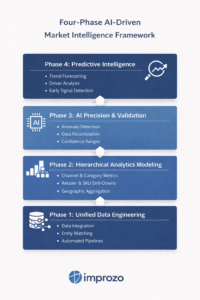
Q4: If you were to break modern market intelligence into a simple framework, what would it look like?

Jane: I think about modern market intelligence as four foundational layers:

Unified Data Foundation
All relevant sources integrated into a single analytics environment—retail, e-commerce, internal sales, and external market feeds.

Hierarchical Performance Modeling
Data structured the way the business actually operates—by channel, retailer type, geography, category, brand, SKU, and time—so teams can aggregate, drill down, and compare accurately. This directly reduces the extra weeks often spent answering, “Why did this number change?”

Precision & Validation Layer
Automated quality checks, anomaly detection, and statistical validation that surface issues early—before commercial leaders discover something “looks off” in a report.

Predictive & Insight Layer
Machine learning models that forecast trends, identify early share shifts, and explain key performance drivers—so teams can anticipate what’s coming, not just react to what already happened.

Together, these layers turn raw data into decision-grade market intelligence.

Q5: Predictive analytics is becoming a major focus across industries. How does AI specifically improve market intelligence outcomes?

Jane: AI allows organizations to model real-world complexity at scale. Instead of relying on straight-line trends, modern analytics can account for seasonality, promotions, channel shifts, competitive behavior, and regional variation, far beyond what manual analysis can support.

Most importantly, AI-driven forecasting replaces single-number projections with probability ranges. That shift—from certainty theater to quantified confidence—gives leaders a much stronger foundation for planning inventory, promotions, and field execution.

Q6: For organizations still operating with legacy reporting approaches, what does a realistic modernization roadmap look like?

Jane: Most organizations follow a practical four-phase progression:

Phase 1 – Data integration
Bringing key internal and external sources into a unified analytics environment.

Phase 2 – Hierarchy structuring
Modeling data across real business dimensions to enable accurate aggregation and rapid drill-down.

Phase 3 – Automation and validation
Reducing manual effort while introducing continuous data quality monitoring.

Phase 4 – Predictive intelligence
Deploying forecasting models, trend detection, and driver analysis.

Importantly, many teams begin seeing meaningful value as early as Phase 2, with predictive capabilities layered in as trust and maturity grow.

Q7: Animal health is an interesting area. Looking ahead, how do you see the role of market intelligence evolving in areas such as animal health?

Jane: Market intelligence in animal health is evolving in ways that mirror broader life sciences through three fundamental shifts:

From retrospective reporting to real-time awareness
Teams will no longer wait for monthly or quarterly summaries. Performance will be continuously visible across channels, geographies, and product hierarchies as market dynamics unfold.

From descriptive metrics to predictive foresight
Analytics will move beyond explaining what happened to forecasting what’s likely to happen next, incorporating seasonality, channel migration, promotions, and competitive behavior with clear assumptions and confidence ranges.

From passive insights to decision enablement
Platforms will not only surface trends, but clearly explain the drivers behind them, supporting faster, more confident commercial decisions.

I’ve seen this shift firsthand in large-scale life sciences organizations. Moving from static reporting to integrated, predictive intelligence fundamentally changes how teams plan, prioritize, and execute. Organizations that make this transition consistently outperform those that don’t.

Final Perspective from Jane

“After working across multiple life sciences organizations, it’s clear that static reports can’t keep pace with today’s market complexity. The future belongs to AI-driven, precision market intelligence platforms that turn fragmented data into timely, predictive insight leaders can actually act on.”

At Improzo, I focus on helping life sciences organizations modernize how they integrate data, structure analytics, and apply AI across complex commercial ecosystems. The goal isn’t more reporting—it’s building scalable, predictive platforms that reduce lag, improve confidence, and enable better decisions at the speed the market now demands.

Unlocking Commercial Success: Mastering the Power of Patient-Level Data in Pharma

In today’s fiercely competitive pharmaceutical landscape, leveraging patient-level data (PLD) is no longer a competitive advantage—it’s a necessity. As the industry evolves, so too must our approach to harnessing the power of this granular data. This blog explores innovative applications of PLD that are transforming commercial strategies and driving improved patient outcomes.

Beyond Aggregates: The Granular Advantage

Traditional market analysis, reliant on aggregated data, provides a limited, top-down view. PLD offers a microscopic perspective, illuminating individual patient journeys and enabling us to understand treatment patterns, pinpoint unmet needs, and personalize engagement with unprecedented precision. This shift allows us to move beyond generic approaches toward a highly targeted, patient-centric model.

Key Applications of PLD for Enhanced Commercial Success:

  1. Comprehensive Patient Journey Mapping: Understanding the intricacies of the patient journey is paramount. By integrating diverse data sources – including electronic medical records (EMRs), claims data, lab results, and patient-reported outcomes – we can create detailed maps of patient experiences from diagnosis through treatment and beyond. This holistic view empowers us to identify critical touchpoints for intervention, optimize patient engagement, and improve adherence.
  2. Predictive Analytics for Enhanced Patient Targeting: Predictive analytics is revolutionizing patient identification and engagement. By analyzing historical patient data, treatment patterns, and even genetic markers, we can forecast which patients are most likely to benefit from specific therapies. This foresight enables highly targeted marketing efforts, timely interventions (e.g., outreach before a patient discontinues treatment), and the identification of high-value patient segments through AI-driven analytics.
  3. Personalized Medicine through Genomic Data Analysis: The rise of personalized medicine is transforming treatment paradigms. Integrating genomic data with traditional health records allows for the development of tailored therapies that cater to individual patient profiles. This approach not only maximizes treatment efficacy but also improves patient satisfaction and adherence. Advanced analytics can identify complex patterns in genetic data, guiding the development of highly targeted treatments.
  4. Real-Time Monitoring with Wearable Technology: Wearable technology offers a wealth of real-time patient data, opening new avenues for enhanced treatment outcomes. Continuous health metrics, such as heart rate, activity levels, and medication adherence, provide invaluable insights into patient behaviors and responses to treatment. This information facilitates timely adjustments in therapy and proactive engagement strategies to optimize adherence and overall health.
  5. Optimizing Clinical Trials with Data-Driven Insights: Data analytics is crucial for streamlining clinical trials. Historical data, predictive modeling, and real-world evidence (RWE) can optimize trial designs, improve site selection, and enhance participant recruitment. This data-driven approach to trial parameters and participant demographics reduces costs and accelerates the delivery of new therapies to market.
  6. Enhanced Post-Market Surveillance: Vigilance doesn’t end with drug approval. PLD analytics empowers continuous monitoring of real-world drug performance. Analyzing adverse event reports, social media sentiment, and other data sources allows for the early detection of potential safety issues and proactive responses. This not only safeguards public health but also protects brand reputation.
  7. AI-Driven Customer Segmentation: AI technologies enable sophisticated customer segmentation. By analyzing vast datasets encompassing demographics, treatment histories, prescribing behaviors, and more, we can identify high-value segments within target markets. This granular understanding allows for highly tailored marketing strategies that resonate with specific audiences, driving engagement and sales performance.
  8. Leveraging Social Media Insights: Social media platforms offer a rich source of real-time feedback. Natural language processing (NLP) techniques can analyze online conversations to gauge public perception of products, identify emerging trends or concerns within patient communities, and track competitor activities. These insights allow for timely adjustments in marketing strategies and product messaging.

Navigating the Challenges of PLD:

Realizing the full potential of PLD requires careful consideration of several critical challenges:

  • Data Privacy and Security: Protecting patient privacy is paramount. Companies must adhere to strict regulations like HIPAA, GDPR, and other global data privacy laws. This involves implementing robust data anonymization or de-identification techniques, secure data storage solutions, access controls, and audit trails. Transparency with patients about how their data is being used is also crucial for building trust.
  • Data Quality and Interoperability: PLD often resides in disparate systems (EMRs, claims databases, labs, etc.). Data quality issues, such as inconsistencies, inaccuracies, and missing data, can significantly impact the reliability of analyses. Investing in data cleaning, validation, and standardization processes is essential. Furthermore, ensuring interoperability between different data sources is crucial for creating a holistic view of the patient journey. This often requires adopting common data models and APIs.
  • Data Governance and Compliance: Establishing a clear data governance framework is critical. This includes defining roles and responsibilities, setting data access policies, and ensuring compliance with all relevant regulations. A dedicated data governance team can help manage data assets effectively and ensure ethical data usage.
  • Data Silos: Data silos within organizations can hinder the effective use of PLD. Breaking down these silos requires fostering a culture of data sharing and collaboration. Implementing centralized data platforms and promoting cross-functional data sharing can help organizations gain a more complete view of their data.
  • Analytical Expertise and Infrastructure: Extracting meaningful insights from PLD requires specialized analytical skills and robust IT infrastructure. Investing in data scientists, analysts, and the necessary hardware and software is essential. Cloud-based analytics platforms can offer scalability and flexibility for handling large datasets.
  • Ethical Considerations: The use of PLD raises ethical considerations, such as potential biases in data and the risk of discriminatory practices. Companies must ensure that their data analysis and decision-making processes are fair, equitable, and transparent. Developing ethical guidelines for data usage is crucial.

The Future of PLD:

The applications of PLD are constantly expanding. As data availability and analytical capabilities advance, we can expect even more innovative uses to emerge. Artificial intelligence and machine learning will play an increasingly critical role in extracting actionable insights and automating commercial processes. Blockchain technology may also play a role in enhancing data security and privacy.

Conclusion:

Patient-level data is a game-changer for the pharmaceutical industry. By embracing a data-driven approach, companies can gain a deeper understanding of their markets, personalize engagement, optimize resource allocation, and ultimately improve patient outcomes. Addressing the challenges outlined above is crucial for realizing the full potential of PLD and ensuring its responsible and ethical use. Those who master the power of PLD will not only achieve commercial success but also contribute to a healthier future.

Commercial Strategies in the Era of Precision Medicine

The pharmaceutical industry is experiencing a profound transformation as precision medicine emerges as a pivotal force reshaping drug development, marketing, and patient care. This shift towards personalized healthcare necessitates a re-evaluation of commercial strategies to effectively navigate the complexities of this evolving landscape. As organizations adapt to the demands of precision medicine, understanding its implications becomes essential for driving success in an increasingly competitive market.

The Shift to Precision Medicine

Precision medicine focuses on tailoring treatments to individual patient characteristics, including genetics, environment, and lifestyle. This approach marks a departure from traditional methods that rely on a one-size-fits-all model, enabling more effective and targeted therapies. According to industry insights, this transition has led to a notable increase in clinical research and product approvals aimed at specific patient populations, particularly in oncology and rare diseases.

Pharmaceutical companies must adapt their commercialization strategies to align with the unique demands of precision medicine. This includes developing targeted sales and marketing approaches that leverage data-driven insights to identify healthcare providers (HCPs) most likely to prescribe or refer patients for these specialized therapies. Achieving personalized engagement with HCPs is crucial for maximizing the impact of precision therapies.

Evolving Commercial Engagement Models

The rise of precision medicine is fundamentally transforming the pharmaceutical industry’s commercial engagement model. Companies must shift from traditional mass marketing strategies to targeted approaches, leveraging advanced analytics to identify healthcare providers (HCPs) most likely to adopt precision therapies based on their prescribing patterns and patient demographics. Embracing omnichannel strategies allows HCPs to access information seamlessly across digital platforms and in-person interactions.

Additionally, increasing patient involvement in treatment decisions necessitates direct engagement strategies that educate and empower patients about precision therapies. Collaboration with stakeholders, including diagnostic developers and payers, is essential for navigating this complex landscape and improving patient outcomes through innovative, personalized treatments.

Changes in Organizational Structure

To support these new engagement models, pharmaceutical companies will need to reconfigure their organizational structures. This includes establishing dedicated analytics teams focused on data collection and integration from diverse sources such as electronic health records (EHRs) and genomic databases. These teams will work closely with research and development (R&D), marketing, and sales departments to inform strategy and optimize decision-making processes.

Additionally, cross-functional collaboration will become essential. The traditional silos between departments must be dismantled to foster a culture of teamwork that aligns R&D efforts with market needs. Commercialization teams should collaborate closely with clinical development teams to ensure that market access strategies reflect the unique characteristics of precision therapies.

Data-Driven Market Access Strategies

In the realm of precision medicine, market access strategies must be redefined. Traditional pricing models are no longer sufficient; companies must adopt data-driven approaches that reflect the value of personalized therapies. With increasing competition and tighter financial landscapes, it is essential for organizations to develop customized market access strategies that consider not only the clinical efficacy of their products but also their economic impact.

Utilizing real-world evidence (RWE) is critical in this context. By analyzing data from diverse sources such as electronic health records (EHRs), patient registries, and claims data, companies can provide compelling evidence of their therapies’ effectiveness in real-world settings. This information can facilitate negotiations with payers and improve reimbursement rates, ultimately enhancing patient access to innovative treatments.

Embracing Companion Diagnostics

The commercialization of precision medicine often involves companion diagnostics—tests used to determine a patient’s suitability for a specific therapy. Integrating companion diagnostics into commercial strategies not only enhances treatment outcomes but also provides additional revenue streams for pharmaceutical companies.

As precision therapies become more prevalent, establishing robust partnerships with diagnostic developers is crucial to streamline the process of bringing these tests to market alongside therapeutic counterparts. This collaboration can facilitate faster patient identification and treatment initiation, ultimately improving overall patient care.

Navigating Challenges in Precision Medicine

While the potential benefits of precision medicine are significant, several challenges must be addressed. Issues such as data privacy concerns, regulatory hurdles, and the need for high-quality data access remain critical barriers. Engaging with regulators and policymakers is essential to shape standards that support innovation while ensuring patient safety.

Moreover, building internal capabilities around data generation, integration, and analysis is vital for success in this new landscape. Organizations may need to partner with specialized firms or invest in training programs to equip their teams with the necessary skills to leverage data effectively.

Conclusion: Embracing Change in Precision Medicine

As the industry moves deeper into the era of precision medicine, pharmaceutical companies must rethink their commercial strategies to capitalize on this transformative opportunity. By embracing data-driven decision-making, optimizing sales and marketing efforts, integrating companion diagnostics into their strategies, adapting organizational structures for enhanced collaboration, and recognizing the critical role of patient influence in treatment decisions, organizations can position themselves for success in an increasingly competitive environment.

The landscape is rapidly changing; those who adapt will not only thrive but also contribute significantly to improving patient outcomes through innovative therapies tailored to individual needs. Embracing precision medicine is not just a strategic imperative; it represents an opportunity to redefine how healthcare is delivered in the 21st century.

Leveraging Next Best Triggers to Transform HCP Engagement in Oncology

In the dynamic and data-driven field of oncology, effectively engaging healthcare professionals (HCPs) is essential for success. Emerging biopharma companies face unique challenges, including narrow drug labels and complex treatment pathways. To navigate this landscape, Next Best Action (NBA) strategies present a powerful approach, enabling personalized and timely engagement with HCPs. This blog outlines how oncology teams can implement NBA to foster meaningful connections and improve patient outcomes.

Precision Engagement through Contextual Insights

The strength of NBA lies in its ability to deliver tailored interactions based on HCPs’ specific needs, preferences, and clinical contexts. For oncology teams, this means identifying the right oncologists, understanding their treatment priorities, and providing insights that align with their patients’ requirements—all at critical moments in the patient journey.

A Step-by-Step Framework for Implementing NBA in Oncology

  1. Consolidating Data for a Unified View
    The first step in implementing NBA is to gather and integrate data from various sources such as electronic medical records (EMRs), claims data, lab results, and clinical trial databases. By unifying these disparate data sources into a single platform, your team can uncover actionable insights. For instance, identifying oncologists who frequently treat specific cancer types allows you to focus outreach efforts on those most likely to benefit from your therapies.
  2. Identifying High-Impact Triggers
    In the oncology space, triggers often arise from patient journeys or clinical milestones. For example:
    • A newly diagnosed patient may prompt an oncologist to consider first-line therapies.
    • Progression events or biomarker test results could indicate a need for second-line treatments.
      Analyzing these triggers through predictive analytics enables your team to anticipate when an oncologist might require additional information or support, ensuring that your outreach aligns with critical decision-making moments.
  3. Crafting Personalized Content for Oncologists
    With oncologists receiving vast amounts of information daily, your messaging must be relevant and concise:
    • Develop content that addresses specific clinical questions or challenges faced by oncologists treating your target patient population.
    • Use real-world evidence or case studies to demonstrate the efficacy of your therapy in similar clinical scenarios.
    • Tailor delivery channels—such as emails, webinars, or peer-to-peer discussions—based on individual preferences. For instance, an oncologist who frequently attends virtual conferences may respond more positively to webinar invitations than traditional emails.
  4. Leveraging AI-Driven Predictive Analytics
    Artificial intelligence (AI) tools are invaluable for enhancing NBA strategies in oncology. By analyzing historical data and real-time interactions, AI can predict which actions will resonate most with each HCP:
    • Should you prioritize a face-to-face meeting over digital outreach?
    • Is now the right time to share a new study or clinical guideline update?
      AI-driven models continuously refine these recommendations based on feedback loops, ensuring that your engagement strategy evolves alongside HCP needs.
  5. Measuring and Optimizing Engagement
    Oncology marketing teams should adopt a culture of continuous improvement by closely monitoring engagement metrics such as email open rates, content downloads, meeting requests, and shifts in prescribing behavior:
    • Use these insights to identify what’s working and where adjustments are needed.
    • Collaborate with sales and marketing teams to ensure alignment on what constitutes success. For example, if a particular webinar garners high attendance but low follow-up engagement, it may indicate a need for more actionable content or clearer next steps.

Why NBA Matters even more so for Emerging Biopharma

For emerging biopharma companies specializing in oncology therapies, adopting NBA strategies is essential for navigating the complexities of cancer care effectively. The precision required at every interaction with HCPs ensures that resources are focused on high-impact opportunities while building trust through timely and relevant information that supports clinical decisions. This approach not only enhances the likelihood of successful engagements but also ultimately improves patient outcomes by equipping oncologists with the insights they need to make informed treatment choices.

Transforming HCP Engagement through NBA

Implementing NBA in oncology requires commitment but offers significant rewards. By consolidating data into actionable insights, identifying key triggers along the patient journey, crafting personalized content, leveraging AI-driven analytics, and continuously optimizing engagement strategies, your team can transform its interactions with oncologists. In an era where precision medicine is reshaping cancer care, NBA empowers emerging biopharma teams to deliver the right message through the right channel at the right time—creating lasting value for both HCPs and their patients.

Planning commercial success for an upcoming specialty drug launch in 2025

As the pharmaceutical landscape continues to evolve, launching a new specialty drug in 2025 presents both unique opportunities and significant challenges. The rapid growth in specialty medications, particularly in areas like cell and gene therapies, requires commercial technology and analytics leaders to adopt a strategic approach that leverages data-driven insights and innovative engagement tactics. Understanding the key factors that will influence a successful launch is crucial for maximizing market impact and ensuring that new therapies reach the patients who need them most.

Navigating the Complex Landscape

The complexity of launching a specialty drug has intensified in recent years due to increased competition, regulatory scrutiny, and the demand for real-world evidence. As of 2024, specialty medications accounted for nearly 40% of total prescription revenues, underscoring their importance in the pharmaceutical market. However, with this growth comes heightened expectations from stakeholders, including healthcare professionals (HCPs), healthcare insurers payers, and patients.

A successful launch requires not only a robust understanding of the competitive landscape but also an agile approach to market access strategies. Companies must be prepared to navigate payer preferences and health technology assessments (HTAs) while ensuring that their product offers distinct value compared to existing therapies. Furthermore, the COVID-19 pandemic has permanently altered how pharmaceutical companies engage with HCPs. In-person meetings decreased significantly during the pandemic, leading to a surge in digital interactions. In 2025, companies must continue to embrace this digital-first approach while balancing it with traditional engagement methods. Leveraging data analytics to understand HCP preferences for virtual versus in-person interactions will be essential for optimizing outreach efforts.

Key Considerations for Launch Strategy

When planning a new specialty drug launch, commercial technology and analytics leaders should focus on several critical areas:

1. Comprehensive Market Preparation: Begin your launch strategy at least 18-24 months prior to the product’s approval. This preparation should include identifying key opinion leaders (KOLs) and engaging them early in the process to gather insights into their needs and expectations. Establishing relationships with KOLs can facilitate smoother access to HCPs once the drug is launched.

2. Data-Driven Decision Making: Implement advanced analytics tools that integrate multiple data sources, including market research, sales forecasts, and real-world evidence. This data should inform your go-to-market strategy by identifying target segments and tailoring messaging accordingly. A robust Customer Relationship Management (CRM) system will also be vital for tracking interactions with HCPs and managing ongoing relationships post-launch.

3. Digital Engagement Strategy: Develop a comprehensive digital engagement plan that includes virtual meetings, webinars, and online educational content tailored for HCPs. Given that a significant portion of HCP interactions now occur through digital channels, ensuring that your messaging is accessible and engaging is crucial for building awareness and driving adoption.

4. Value Demonstration: Clearly articulate the value proposition of your specialty drug not just from a clinical perspective but also in terms of patient outcomes and cost-effectiveness. Providing real-world evidence demonstrates how the drug improves patient care can help persuade payers and HCPs of its worth.

5. Post-Launch Monitoring and Adaptation: Once your drug is on the market, continuously monitor its performance against key metrics such as sales volume, market share, and HCP engagement levels. Use this data to adapt your strategy as needed—whether that means refining messaging or adjusting promotional tactics based on real-time feedback from the field.

Conclusion

Launching a specialty drug in 2025 requires careful planning and execution across multiple dimensions—from market preparation and data analytics to digital engagement strategies and value demonstration. By embracing these considerations, commercial technology and analytics leaders can position their organizations for success in an increasingly competitive environment. As the pharmaceutical industry continues to transform through technological advancements and changing healthcare dynamics, staying ahead of these trends will be essential for achieving long-term commercial success. Ultimately, a well-executed launch not only drives revenue but also plays a critical role in improving patient access to innovative therapies that can enhance their quality of life.

The Future of Drug Discovery: How Technology is Changing the Game

Drug discovery is a protracted and resource-intensive endeavor, typically requiring a decade or more and substantial financial investment to bring a single novel therapeutic to market. However, the emergence of innovative technologies presents a transformative potential for accelerating and optimizing this process.

Artificial intelligence (AI) stands as a prominent example, offering powerful capabilities in drug target identification, novel molecule design, and the refinement of drug screening methodologies. Furthermore, AI-driven predictive models are increasingly employed to assess the safety and efficacy of potential drug candidates.

Beyond AI, other cutting-edge technologies significantly impact the drug discovery paradigm. Genomics, the study of the human genome, provides invaluable insights into disease-associated genes, enabling the development of targeted therapies. Similarly, proteomics, the study of proteins, facilitates the identification of disease-relevant protein targets for therapeutic intervention.

Single-cell analysis, a revolutionary technique, allows for the in-depth characterization of individual cells, enabling the identification of rare cell populations implicated in disease pathogenesis and the development of targeted therapies for these elusive subpopulations.

These advancements collectively signify a paradigm shift in drug discovery. By leveraging these emerging technologies, researchers can expedite the discovery process, enhance the efficiency of drug development pipelines, and ultimately expand the therapeutic armamentarium for previously intractable diseases. The future of drug discovery holds immense promise, with these technological innovations poised to revolutionize healthcare and improve the lives of countless individuals.”

Enhancing Your Commercial Model Design via Medical Science Liaisons

In the pharmaceutical industry, the role of Medical Science Liaisons (MSLs) has evolved significantly since its inception about 50 years ago. Initially focused on promotional activities, MSLs now serve as vital connectors between pharmaceutical companies and the medical community. For commercial technology and analytics leaders, understanding how to effectively integrate MSLs into your commercial model design can enhance engagement with healthcare professionals (HCPs) and ultimately drive better patient outcomes.

Key Challenges Faced by Medical Science Liaisons

Despite their importance, MSLs encounter several challenges that can hinder their effectiveness. One significant challenge is engaging KOLs, who have diverse needs that change over time. MSLs must stay attuned to these evolving preferences but tracking them can be cumbersome without the right tools. Additionally, accessing top KOLs presents a formidable obstacle; busy schedules and gatekeepers often limit MSL availability to these influential figures. This inaccessibility can create barriers to meaningful engagement. Lastly, MSLs face the daunting task of simplifying information consumption amidst an overwhelming amount of data—from clinical trial updates to industry trends. Without streamlined processes for assimilating this information, MSLs may struggle to focus on actionable insights rather than getting lost in data.

Leveraging MSLs for Commercial Model Design

Integrating MSLs into your commercial model design offers several strategic advantages:

  • Enhanced Relationship Management: By equipping MSLs with advanced analytics tools, pharmaceutical companies can empower them to build deeper relationships with KOLs. These tools can help track interactions, preferences, and emerging trends, enabling more personalized engagement strategies.
  • Data-Driven Insights: MSLs are uniquely positioned to gather real-world insights from KOL interactions. By incorporating these insights into your commercial strategy, you can better align your messaging and product offerings with the needs of healthcare providers. This alignment not only enhances engagement but also fosters trust and credibility in your brand.
  • Streamlined Communication Channels: Establishing clear communication channels between MSLs and commercial teams ensures that insights gathered by MSLs are effectively shared across the organization. This collaboration can lead to more informed decision-making regarding marketing strategies, sales approaches, and product development.

Implementing Effective Solutions

To address the challenges faced by MSLs and enhance your commercial model design, pharmaceutical firms consider many viable solutions and strategies such as:

  1. Investing in Technology: Implementing a robust Customer Relationship Management (CRM) system tailored for medical affairs can streamline data collection and analysis for MSLs. This technology should facilitate tracking KOL interactions, preferences, and emerging trends in real time.
  2. Providing effective Training and Support: Continuous training for MSLs on the latest scientific advancements and industry trends is essential. Additionally, equipping them with resources that simplify information consumption will allow them to focus on high-impact activities rather than administrative tasks.
  3. Fostering Cross-Functional Collaboration: Encourage collaboration between MSL teams and other departments such as marketing, sales, and R&D. Regular meetings to share insights from KOL engagements can lead to a more cohesive strategy that aligns with market needs.

The integration of Medical Science Liaisons into your commercial model design is not just an operational enhancement; it is a strategic imperative in today’s competitive pharmaceutical landscape. By recognizing the critical role that MSLs play in bridging the gap between science and commercial success, pharmaceutical companies can leverage their expertise to foster deeper relationships with healthcare professionals, drive informed decision-making, and ultimately improve patient outcomes.

As commercial technology and analytics leaders navigate this evolving landscape, investing in the capabilities of MSLs will be key to achieving long-term success in the pharmaceutical industry. Embracing this approach will not only enhance engagement but also position your organization as a trusted partner in advancing healthcare solutions.